
Berlin stages I know from the inside
IFA Berlin. GITEX Europe. Alte Münze. Factory Berlin. Station. CIC. WeWork. Stages from fifty people to five thousand.
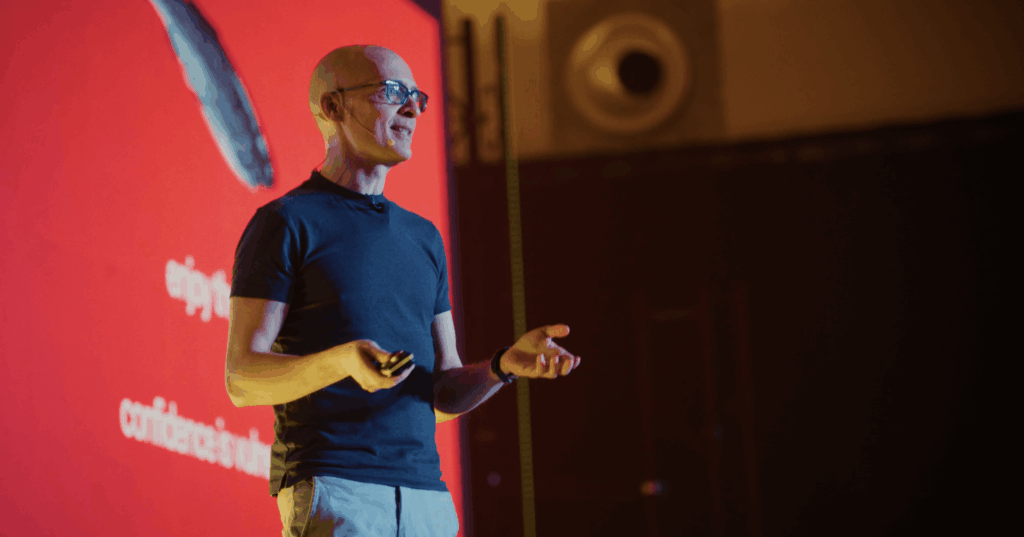
My Oura ring logged the GITEX Europe keynote as athletic activity. 105 beats per minute. That’s what a good keynote feels like.
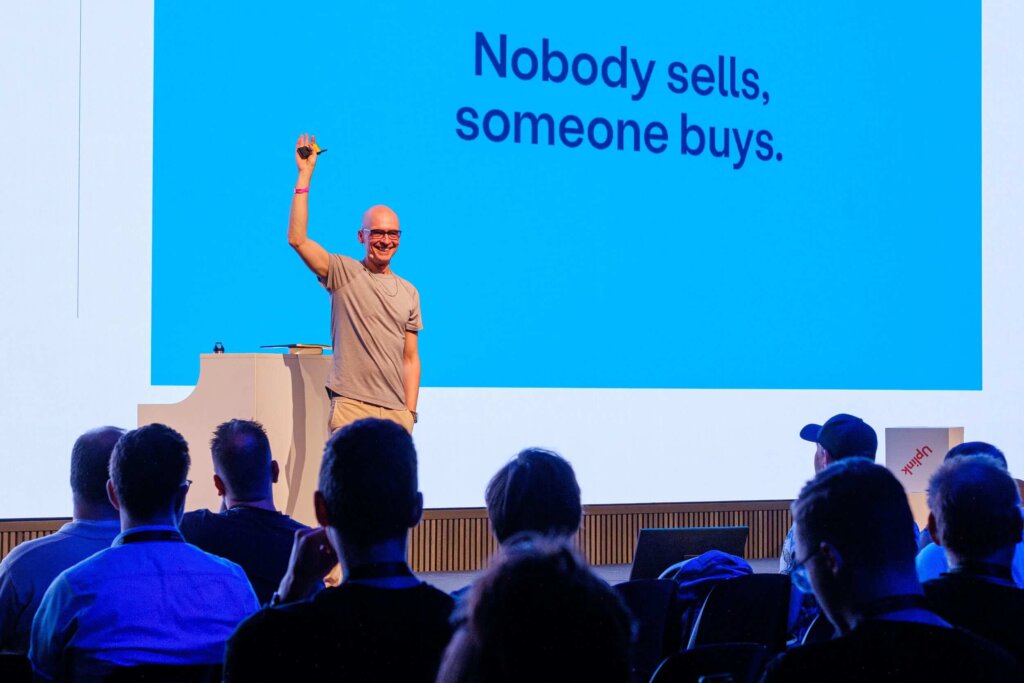
I am a deep introvert and a stage animal. I can switch it on and make magic happen.
“Matteo was one of the best speakers at the conference. He was exceptionally prepared and responsive before the event, and helped promote it. Plus delivered an exciting and valuable presentation, that kept the audience fully involved. We’re actually in the process of booking him for two more events.”
Yurii Lazaruk
Event & Community Architect, 9am. Freelance Unlocked, Berlin.
Keynote topics for Berlin conferences
Every talk is customized. I don’t deliver the same keynote twice. But these are the five themes I return to most, because they map the five places leaders quietly stall. Each one hits differently in Berlin.
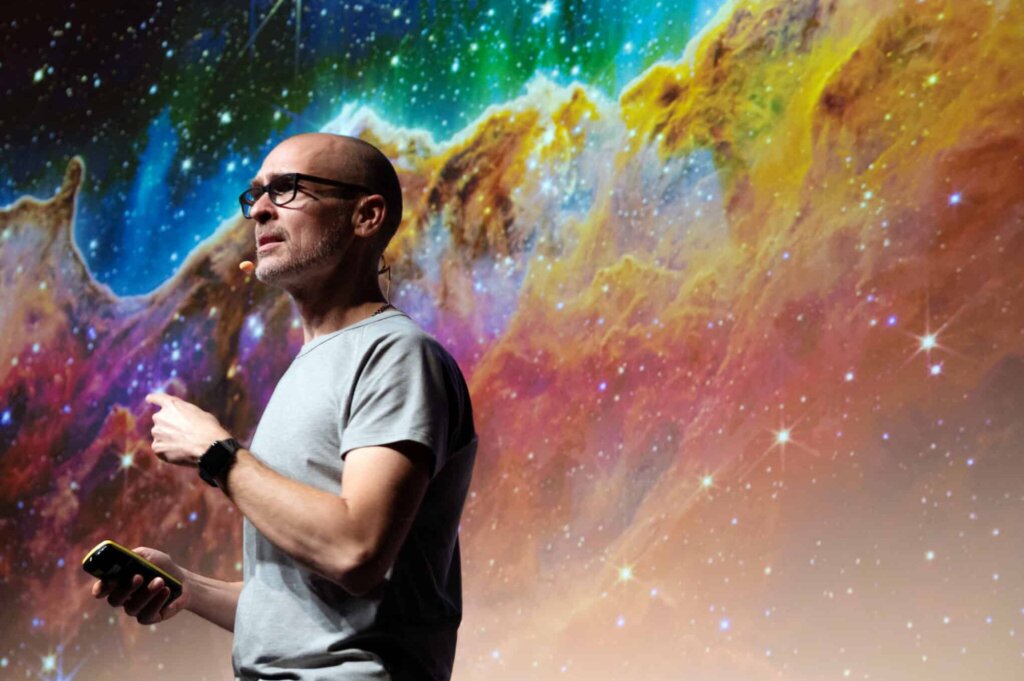
From Mal-AI-se to Ren-AI-ssance
The AI keynote for Berlin’s tech scene. The city runs on talent. Silicon Allee, WeAreDevelopers, hundreds of startups building on AI. This talk addresses what everyone in the room is thinking but nobody is saying out loud.
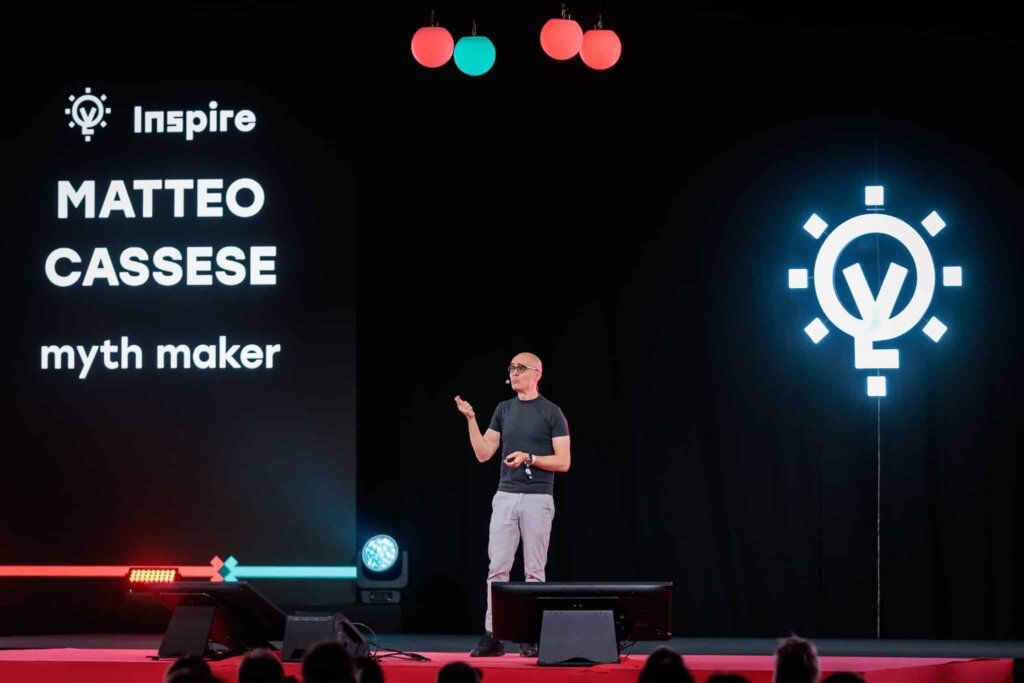
The Power of Discomfort
A leadership keynote built for Berlin, where risk-taking is in the city’s DNA. This talk attacks the discomfort your leaders are avoiding. The painful questions that could transform your business.
The Confidence Paradox
Berlin boardrooms are full of people performing confidence. This motivational keynote reveals the paradox that changes everything about how you recognize a truly confident leader.
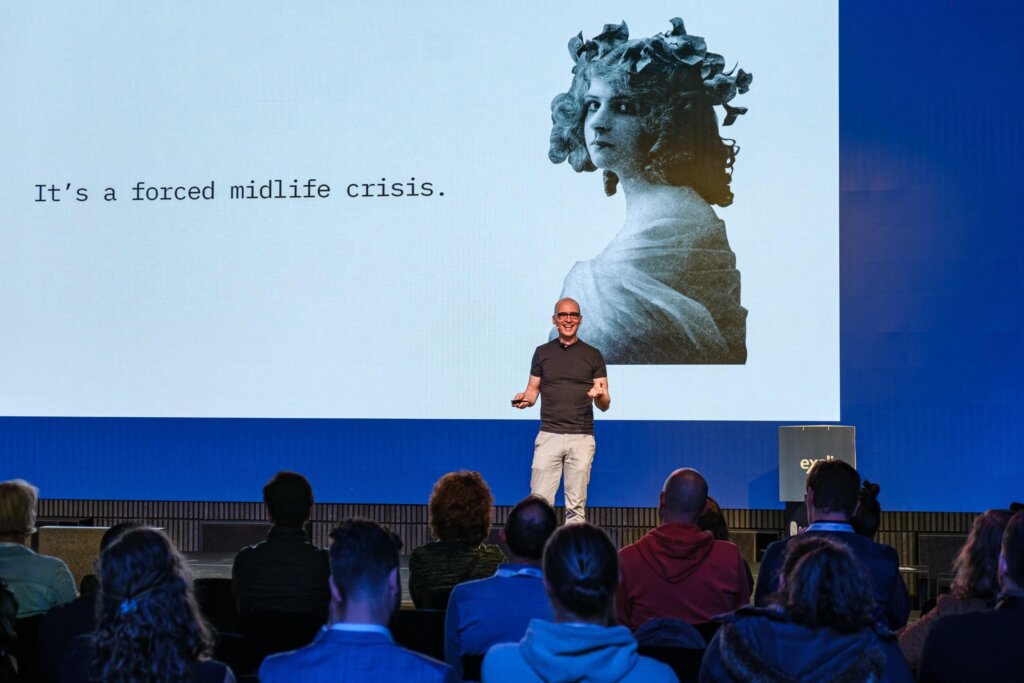
Every Curse Hides a Blessing
Berlin has seen waves of restructuring, layoffs, market shifts. This is the keynote for corporate events in those moments. When your worst chapter might be your greatest asset.
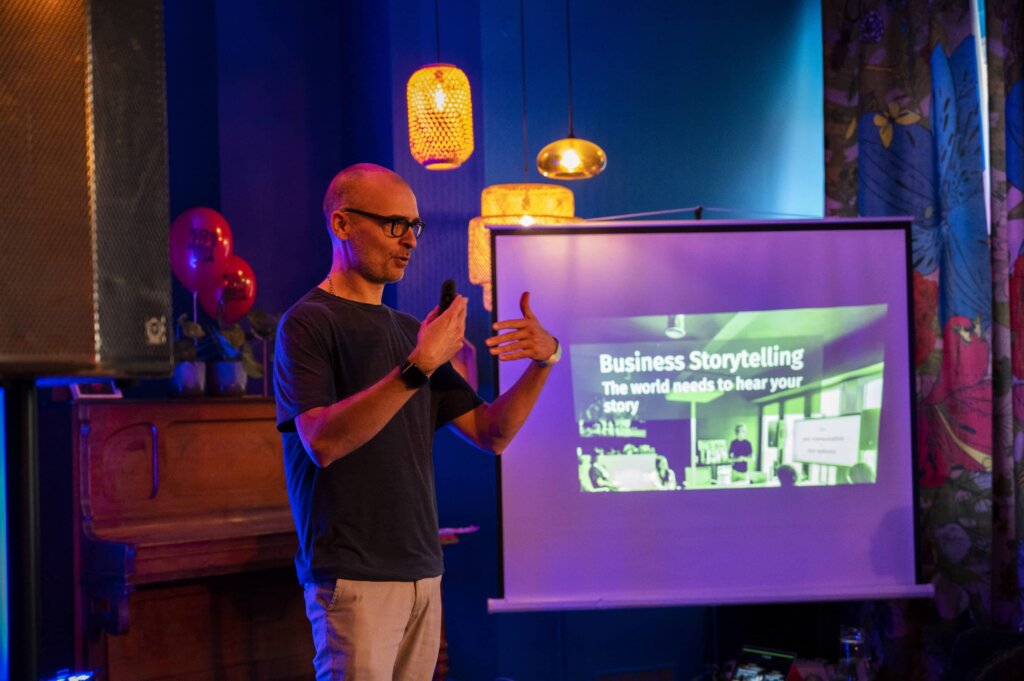
Storytelling Is Not What You Think It Is
I delivered a full-length storytelling masterclass to startup entrepreneurs in Berlin. Marketing teams and leadership summits are the rooms that book this business keynote.
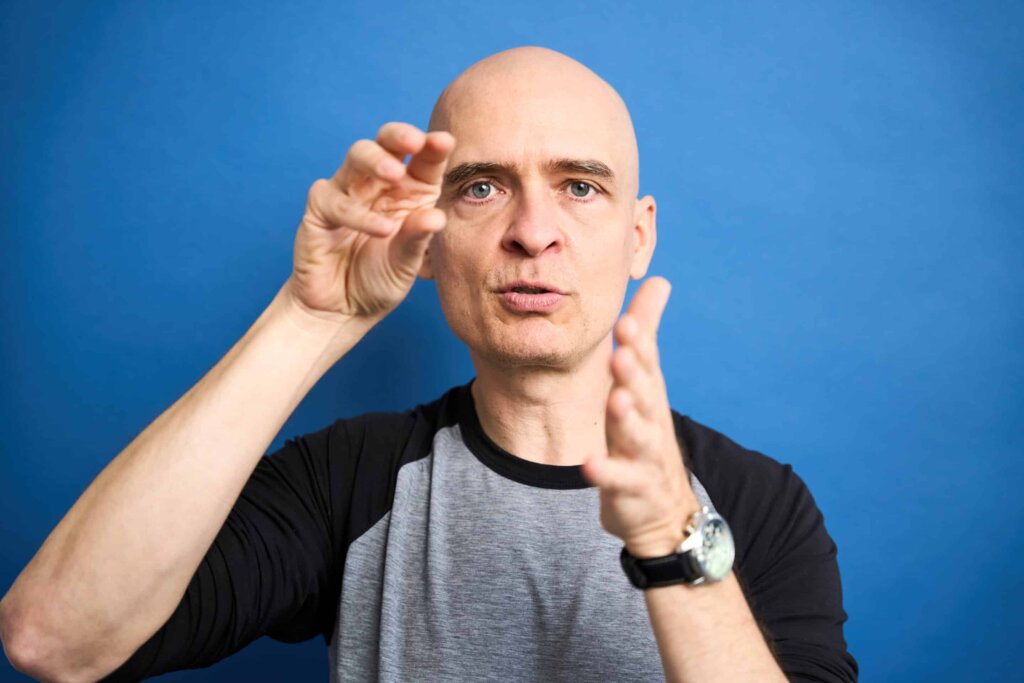
Keynotes that get leaders unstuck
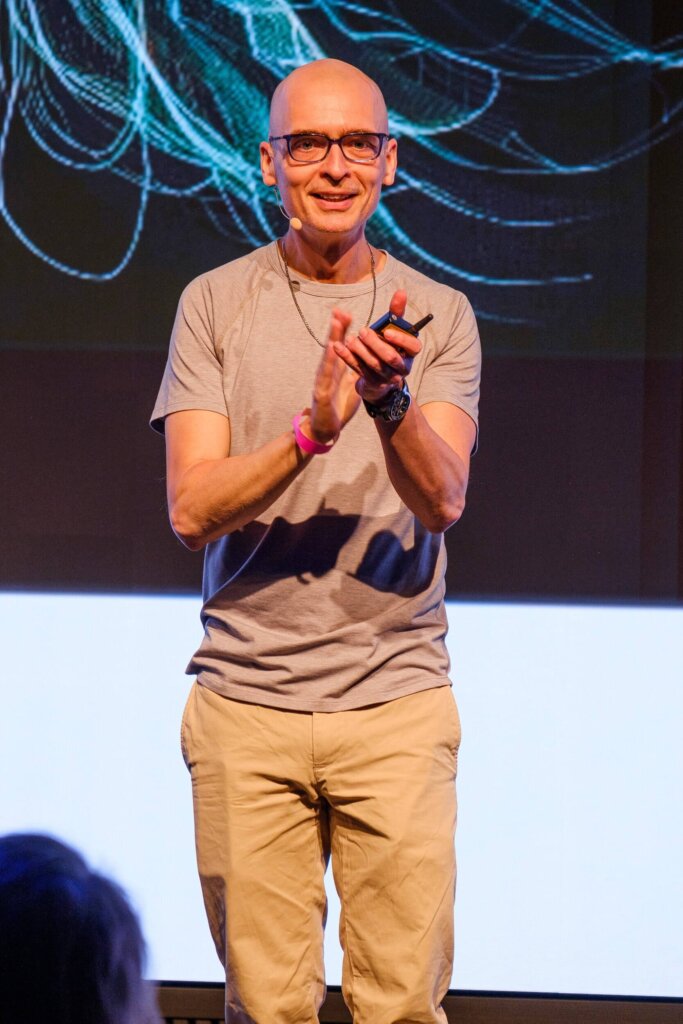
Matteo Cassese, international leadership keynote speaker, helps organizations see leadership differently. Not through motivation posters or five-step methods, but by going to the place most of us avoid to confront the real reasons leaders get stuck. Matteo Cassese brings twenty years of experience to conferences, corporate events, and leadership retreats worldwide. His keynotes cover self-awareness, AI readiness, confidence, and storytelling. They don’t just inspire. They change how people think and act long after the event ends.
Change how your audience thinks
Leaders need new maps. The old ones don’t work anymore.
Matteo Cassese shows them how to navigate technological & social disruption using principles that never fail: building real confidence, telling better stories, understanding what drives them.
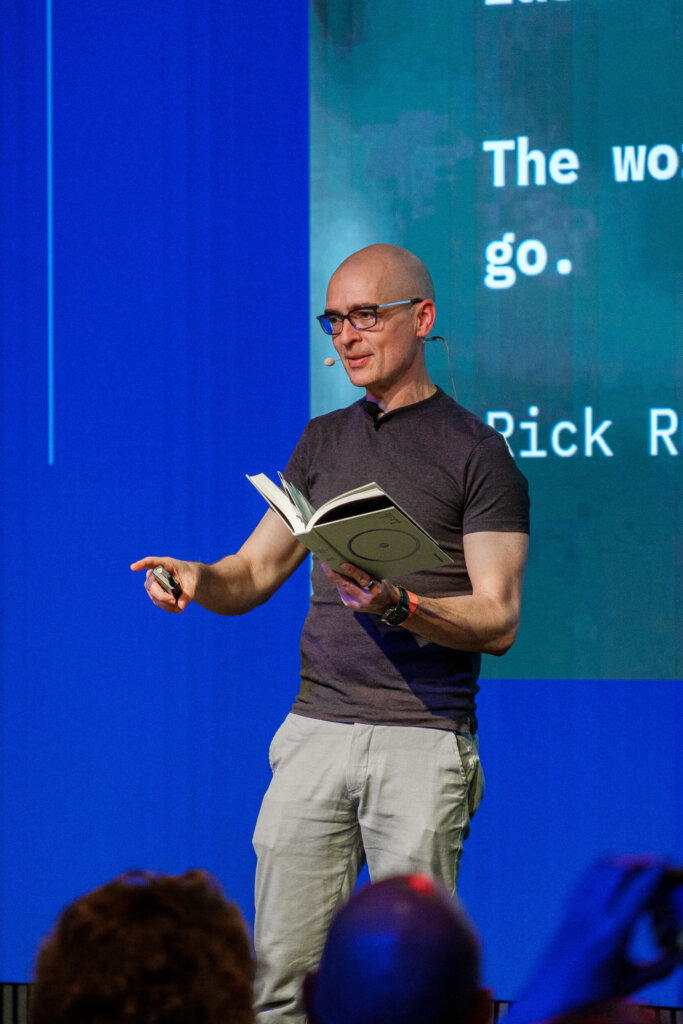
Pick your challenge
- AI making everyone anxious
- Teams burning out from change
- Confidence at an all time low
- Leaders don’t inspire
- Success feels hollow
Your audience leaves with tools they’ll actually use. Not another framework to forget.
What happens before, during, and after your Berlin event
You’re not booking a speaker. You’re getting a partner for the entire arc of your event.
I don’t deliver the same talk twice. I build it around you.

Before the conference
- Personally attend and interact with you in up to 3 briefing calls
- Post to my socials and my email list about your event
- Shoot a promotional reel for you
- Promote your event on podcasts
- Write a blog post
- Host a live coaching session for your audience
At the conference
- Be there early
- Attend all talks on the day I speak
- Integrate insights from previous speakers into my talk
After the conference
- Ask-Me-Anything session for your audience (after the talk)
- Share full video of the talk on my socials
Trusted by leaders at companies that look for depth
Stages that matter

Book someone they’ll still be quoting next year
“There were at least 500 people in the room. I’m pretty sure your speech made an impact and triggered a mindset shift for each and every one of them. Amazing.”
Zeineb Mrabet
“Arguably the deepest talk of the entire conference. You could feel the energy in the room shift.”
Julian Farizi
“A deeply human experience. He presented the very opposite of a quick life hack and gave a feeling of confidence to everyone in the room. The takeaway was empowerment. What a feat.”
Gregor Müllegger
Senior Software Engineer
“The talk was easy to listen to, with a perfectly clear flow of discussion. What stands out most is the lasting impact: the audience leaves with a seed planted in their minds.”
Angela Violino
Brand Communication Designer, Doodle
“And then Matteo Cassese closed the show with his powerful stage presence, challenging us to rethink the future of work.”
Grazia Ravelli
“It was a pleasure to see you speak! In a world of template frameworks and growth playbooks, it was refreshing to hear someone call the chaos! I’m sure it inspired and energized many!”

Norman Schütt
“The first talk I’ll rewatch when the recordings are out is Matteo Cassese’s. Truly inspiring.”
Balach Hussein
Your insider guide to Berlin conferences
I’ve been here fifteen years. I’ve spoken in most of these rooms. What follows what I’d tell you over coffee if you asked me where to put your next event.
Berlin’s best conference venues, and the ones that surprise you
Berlin’s strength is its post-industrial real estate. There are buildings in this city that were built for broadcasting, aviation, manufacturing, and nightlife, and now they host the conferences that shape industries. Here is what I have learned about the ones worth booking.
Alte Münze
Post-industrial grandeur right in Mitte. The space has weight to it. Your audience feels it the moment they walk in.
Funkhaus
A former East German broadcasting complex on the Spree. The acoustics are legendary. If sound quality matters to your event, this is the room.
CIC Berlin
The Cambridge Innovation Center in Treptow. This is where I held my first Berlin storytelling masterclass. Intimate, startup energy, perfect for workshops and smaller leadership events.
Tempelhof
The vast halls of Berlin’s former airport. Nothing communicates scale like Tempelhof. It was once the largest building on the continent. Now it’s where Berlin goes when it needs space to think big.
Neuland (NLND)
The former Philip Morris building, now one of Berlin’s most promising new event spaces. Keep this one on your radar.
Messe Berlin
Trade fair scale. This is where I moderate the Startup Pitch Battle every year. If your event is part of a larger industry gathering, Messe is the infrastructure.
Haus der Kulturen der Welt (HKW)
Architecturally stunning, very central, and excellent for events where you want your attendees focused. The building itself becomes part of the experience.
BCC at Alexanderplatz
The obvious, default choice. Read the next section before you book it.
Berghain
The holy grail. Occasionally used for art exhibitions and cultural events. Getting Berghain for a corporate conference would be extraordinary. Not impossible. But extraordinary.
Tresor
The legendary club has adjacent space that can work for events. If your audience skews creative, tech, or music industry, the name alone changes the energy.
Station Berlin
A former postal station near Gleisdreieck. Large, flexible, industrial. Home to re:publica and Bosch Connected World. One of Berlin’s most versatile event spaces, but the acoustics are aweful.
Factory Mitte
The recently renovated event space in Rheinsberger Straße. Startup ecosystem at the centre. Good for innovation-focused events and workshops.
betahaus Kreuzberg
The startup scene’s living room. If your event is for founders and freelancers, they already know this building.
“Berlin doesn’t have a centre. This is the single most important thing to understand about planning an event here.”
The Alexanderplatz trap
Alex is called the centre, but it doesn’t feel like one. During the day, you’ll feel like you’re inside a mall, not a city. At night, it gets rough quickly. It has a conference centre. It has hotels. It looks like where you should be on the map. It’s not where you want your people spending their evenings.
Choose Kreuzberg for startup energy. Choose Mitte-South for polish. Choose the Spree corridor for atmosphere. Your attendees will thank you.
Getting here and getting around
BER airport sits southeast of the city. Forty-five minutes to central Berlin by taxi, faster by the FEX express train. The airport’s location actually makes the southeast surprisingly attractive for conferences. Treptow, Adlershof, and the Spree corridor are closer to BER than most people expect.
Inside Berlin, the U-Bahn and S-Bahn reach everywhere. The city is flat and bikeable. But Berlin is sprawling. Do not assume your attendees can walk between venues or between their hotel and the conference. Budget for transit, or choose a venue with good S-Bahn or U-Bahn access.
Berlin’s event calendar: when to book and when to avoid
Berlin has a dense calendar of trade fairs, festivals, and conferences. If you don’t plan around them, you’ll pay double for hotels and compete for venues. Here’s what to know.
January
Cold. Grüne Woche (the world’s largest food and agriculture fair, 300,000+ visitors) fills mid-range hotels around Messe from mid to late January. Transmediale and CTM Festival run digital culture and experimental music events across niche venues including Tresor’s adjacent spaces. Low tourist traffic otherwise.
February
Cold, grey, and deceptively expensive. Berlinale (the Berlin International Film Festival, 300,000+ tickets) and Fruit Logistica (2,600 exhibitors from 90+ countries) overlap in early to mid February. Central hotels spike. If your event has nothing to do with film or produce, February is avoidable.
March
ITB Berlin. The world’s largest tourism trade fair, 2,000+ exhibitors, 160+ countries. Massive hotel demand citywide. The Berlin Half Marathon at the end of March closes central streets. Otherwise transitional, still cold.
April
The sweet spot. Mild weather, no megafairs, good venue availability, reasonable hotel prices. If you have any flexibility on dates, April is your month.
May
Excellent until the last week. re:publica (Europe’s largest digital society festival, 30,000+ attendees) and the Carnival of Cultures (1.5 million visitors on the streets) collide in late May. Book early May and you get warm weather with no competition.
June
Tourist season begins. ILA Berlin (the aerospace exhibition, near BER airport) brings government delegations. GITEX AI Europe (30,000+ attendees, 2,500 exhibitors) at Messe bridges into July. The city gets busy.
July
The WeAreDevelopers and Lollapalooza fortnight (July 8 to 19) creates an unexpected hotel crunch. WeAreDevelopers brings 15,000 developers to CityCube, Lollapalooza brings 70,000 to Olympiastadion. Otherwise, peak summer, hot, good for outdoor programming.
August
Quiet. The city empties out as Berliners leave. Hotel rates drop. Pop-Kultur Festival at Kulturbrauerei is the only notable event. A good month for internal corporate retreats if your attendees don’t mind the heat.
September
Avoid. This is the single hardest month for event planners. IFA (220,000 visitors, the world’s largest consumer electronics fair, September 4 to 8), InnoTrans (the world’s largest transport tech fair, every two years, the Berlin Marathon (55,000 runners, 64% of hotel rooms pre-sold by March, September 27), Berlin Art Week, and FIBA Women’s Basketball World Cup. Hotel prices peak at around 180 euros per night. Book 12 to 18 months in advance or pick another month.
October
Good. Festival of Lights (October 9 to 18) illuminates landmarks and draws evening tourists, but daytime hotel rates stay moderate. droidcon (Android developers) and Smart Country Convention run at Messe. Functional weather, reasonable prices, declining tourist numbers.
November
The planner’s secret. Cheapest hotel rates, most available venues, zero competition from major events. Berlin Science Week runs early November. The weather is cold and dark, which means your attendees stay at the conference instead of wandering off to sightsee.
December
Christmas markets from late November through December 24 generate leisure tourism. Corporate event season effectively ends late November. Cold, dark by 4pm.
Short answer: April and early May are the strongest months. November is underrated. September 2026 is a disaster. February and late January are expensive traps.
After the conference: where your team actually wants to go
Berlin’s hidden gift to event planners: the city doesn’t stop when your program ends. This is where your attendees become your promoters, because they’ll talk about the evening as much as the keynote.
The food. Berlin is one of the best places to eat in Europe. Not because of Mediterranean-fresh ingredients or Michelin temples. Because of the influx. Vietnamese, Korean, Japanese, Italian, at a quality and price point that shocks people from London or Paris. Miss Saigon in Kreuzberg for Vietnamese. Kimchi Princess for Korean. Cocolo Ramen for the best bowl in the city. Prometeo in Schöneberg for Neapolitan pizza that rivals Naples. Zola on Christburger Straße. The Korean restaurants tucked into Friedenau. Your attendees from Munich and Zurich will not believe what they’re eating.
The Spree. The post-industrial districts along the river are where your attendees will wander after the last session. Walk east from Kreuzberg along the water and the city changes every fifteen minutes. Warehouses turning into galleries, galleries turning into restaurants, restaurants next to empty lots that will be something new by next year. Keep going southeast and you hit Oberschöneweide, Berlin’s old “Elektropolis,” where AEG built the transformers and the GDR made television tubes. Now ASML, the Dutch company that makes the only machines capable of manufacturing advanced chips, has opened an R&D facility inside the historic Peter Behrens Building. A century of industrial history, and the next chapter is already being written. The Industriesalon Schöneweide museum runs guided tours of the old factories every Friday and Sunday if your attendees want to see where Berlin’s future is coming from.
The eastern frontier. Lichtenberg and beyond. Museums, new development, quiet. If your attendees need to decompress after two days of conference intensity, this is the side of Berlin that doesn’t try to impress you. It just exists.
The obvious. Berlin’s nightlife is not a secret. And Berlin is the least ageist city in the world when it comes to going out. You can go clubbing till you’re ninety and nobody blinks. Tresor, the hidden bars in Neukölln, the jazz clubs in Schöneberg. Not every post-conference evening needs to end at 6am. But in Berlin, it can.
The mythmaker who decoded leadership
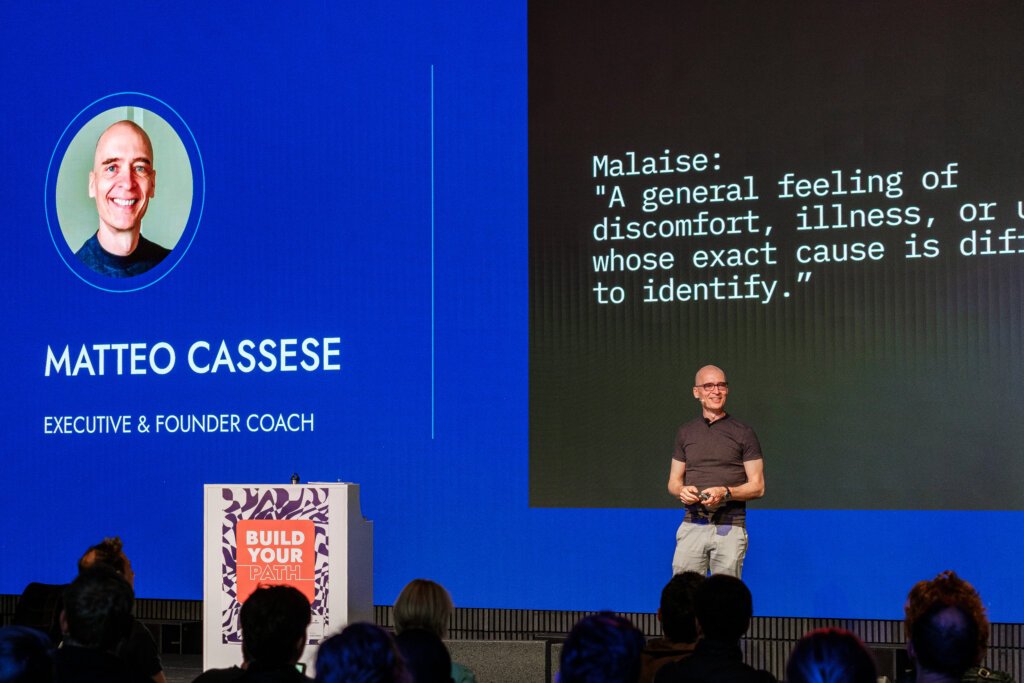
Matteo Cassese is an international keynote speaker, business coach, and mythmaker who has called Berlin home for fifteen years.
Over two decades across tech, film, and consulting. From launching more than 140 films at Warner Bros. to advising Netflix, Sony, LinkedIn, and Heineken. Matteo has observed what truly makes leaders and what breaks them.
His keynotes don’t just inspire. They transform. He blends psychology and myth to help leaders understand the hidden stories that drive their behavior, and how to change them.
A queer nerd passionate about mythology, technology, tarot, fitness, nature, and cars. On stage, something switches on. In his own words: “I am a deep introvert and a stage animal. I can switch it on and make magic happen.”
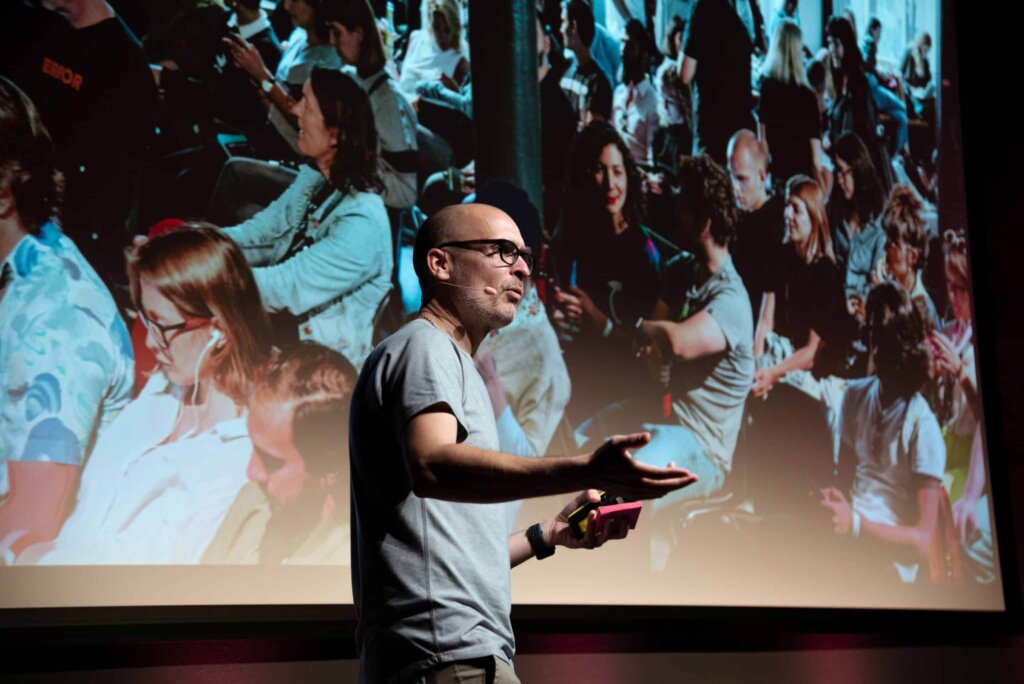
Whether speaking to a room of five hundred at Messe Berlin or guiding founders one-on-one, the mission is the same: to help people make meaning out of chaos, so they become someone new on the other side.
Frequently asked questions about booking a keynote speaker in Berlin
What makes Matteo different from other keynote speakers in Berlin?
He lives here. Fifteen years. He has spoken at IFA, GITEX Europe, Alte Münze, and Factory Berlin. He knows the venues, the industries, the audience. Most speakers motivate. Matteo unsettles. Not to be provocative, to be honest. Leadership doesn’t shift because people felt inspired for an hour. It shifts when they see themselves differently. He gets them there on stage with mythology, psychology, and twenty years inside startups and corporates.

What keynote topics work best for Berlin conferences?
It depends on what your audience is struggling with. AI anxiety in the tech sector? “From Mal-AI-se to Ren-AI-ssance.” Leadership teams performing confidence instead of having it? “The Confidence Paradox.” A company going through restructuring or change? “Every Curse Hides a Blessing.” Marketing and communication teams that need to cut through noise? “Storytelling Is Not What You Think It Is.” Founders pushing through discomfort? “The Power of Discomfort.” Each talk is customized to your industry and audience. None of them are delivered the same way twice.
How do you customize the keynote for our audience?
It starts with a briefing call. Not a logistics call. A real conversation about your people, your industry, and the outcome you need when they walk out of the room. I review your full program. I research your sector. I ask uncomfortable questions about what your audience actually needs to hear versus what they want to hear. The core ideas stay the same. Everything around them changes.
Who books you for Berlin events?
Conference organizers, L&D managers, and leadership teams. IFA Berlin trusted me back two years running. GITEX Europe Berlin put me on the Elevate Stage. Freelance Unlocked at Alte Münze made me their closing keynote. I have also worked with Netflix, PwC, LinkedIn, Heineken, SoundCloud, Vinted, Zenjob, and Personio. Corporate leadership summits, technology conferences, startup events, executive retreats. Audiences from 50 to 5,000. What they share: they want their people to think differently, not just feel inspired for an hour.
What size audiences do you speak to in Berlin?
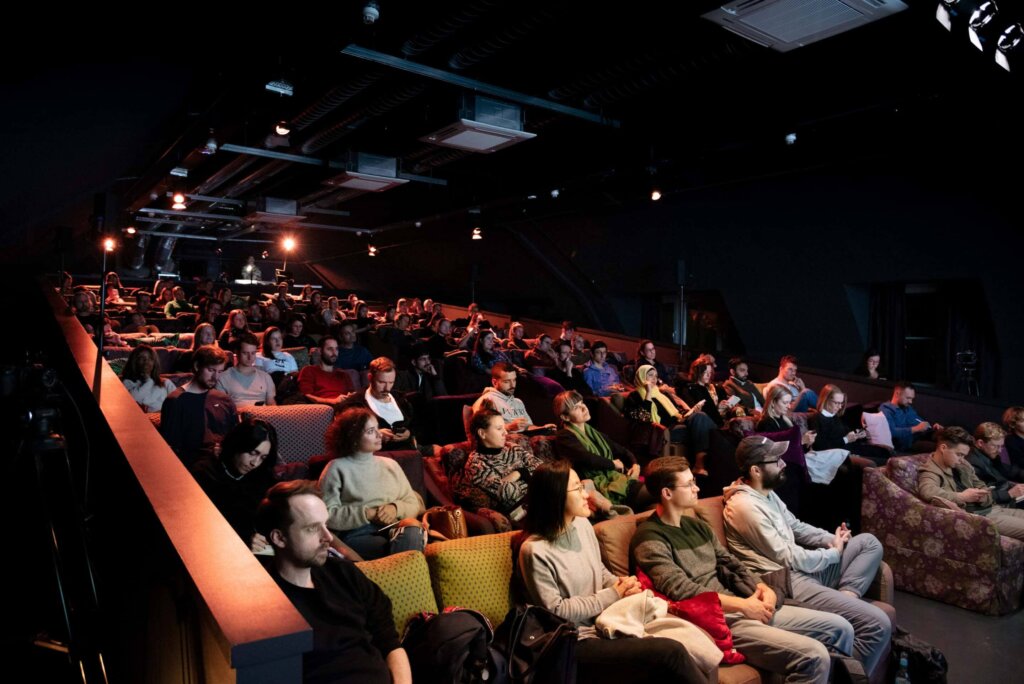
Fifty to five thousand. An intimate executive retreat at betahaus is a different challenge than the Elevate Stage at GITEX Europe. Both require you to read the room. Both require you to be fully present. I don’t phone in small events and I don’t hide behind spectacle at big ones. The talk changes shape for the room. The honesty never does.
What language do you speak on stage?
English. Every keynote I give is in English. Berlin is an international city and the vast majority of Berlin conferences run in English. During the briefing call we discuss your audience mix so the examples, references, and cultural touch points land right. If your audience has a specific background or industry, that shapes the talk. The language stays English.
What venues in Berlin do you recommend for a keynote event?
Alte Münze for post-industrial atmosphere. Funkhaus for acoustics. CIC Berlin for intimate startup energy. Station Berlin for flexibility. Factory Mitte for the innovation crowd. Tempelhof for scale. HKW for architecture. I’ve spoken in most of the major Berlin venues over the past fifteen years. If you’re not sure where to host, I can help you think through it. The full venue guide is further up this page.

How far in advance should we book a keynote speaker in Berlin?
The busiest slots get taken three to six months out. April through June and September through October are peak conference season in Berlin, and they overlap with major trade fairs at Messe. If your event is near IFA, ITB, or re:publica dates, book earlier. For smaller events with flexible dates, four to eight weeks can work. Reach out earlier and we can build more into the event together.
What support do you provide before and after the keynote?
Every engagement starts with a discovery call. I review your program and align on the brief. Before the event, I promote it on my channels, shoot a promo reel, and write a blog post. At the conference I’m present before my slot. Not backstage. In the room, listening to other speakers. After the keynote, attendees get an Ask-Me-Anything session and follow-up resources. If you want to go deeper, coaching sessions and workshops are available.
Do you speak at events outside Berlin?
Based in Berlin, but the work takes me across Europe, the US, and Asia. SXSW. IFA. GITEX. Reeperbahn Festival. Campus Party. InfoShare. Cities big and small: London to Lisbon, Prague to Paris. Travel is handled as part of the booking and confirmed when we sign. If you’re outside Europe, reach out early. Some dates need more lead time.
Can you combine the keynote with a workshop or coaching session?
I only offer the best I can do and my zone of genius is the stage or 1:1 coaching. I don’t offer workshops. But I know some great facilitators that would love to pair up with me and deliver a great workshop after one of my inspiring talks.
How do I start the booking process?
Hit “Put your date on hold.” That’s not a commitment. It’s a conversation starter. You tell me the date, the location, and what you’re building. I’ll tell you if I’m available and whether what you need is something I can do well. If it’s a fit, we move to a brief and a proposal. If it isn’t, I’ll refer a colleague who would be a better fit. No intermediaries. You talk to me directly.
Other cities Matteo speaks in
Across the DACH region: Hamburg, Frankfurt, Munich, and Zurich. For the full European picture, see keynote speaker Europe.
Transform your Berlin event with an unexpected “aha” moment
Every Matteo Cassese keynote reveals the hidden patterns keeping your leaders stuck. And shows them how to break free. Your audience won’t just be inspired. They’ll be different.
About
Keynote Speaker Berlin is a professional speaking service by Matteo Cassese, offering customized keynotes on AI transformation, leadership confidence, business storytelling, and personal growth for conferences, corporate events, and leadership summits in Berlin and worldwide.
Related
- Provider: Matteo Cassese (Person)
- Related: Professional Speaker (Service)