
Slush. Nokia. Sisu. This city knows what real looks like.
Helsinki is where Slush turned a student project into a global startup stage. Where Nokia’s collapse seeded an entire tech ecosystem. Where audiences have a word, sisu, for the grit that gets you through when everything looks impossible. You do not impress this room with polish. You earn it with depth.
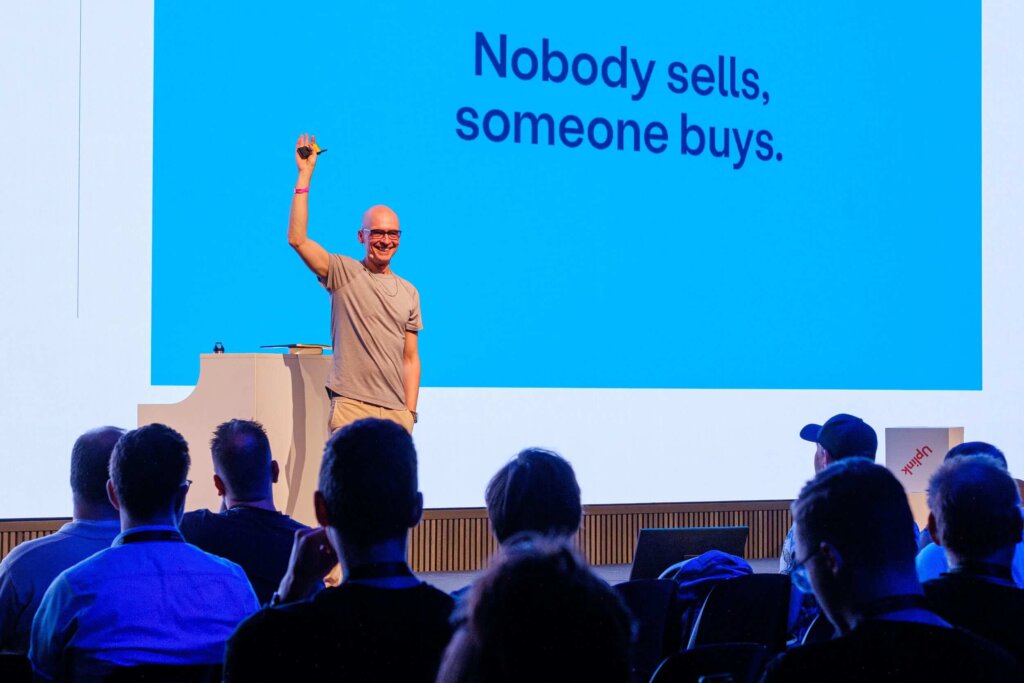
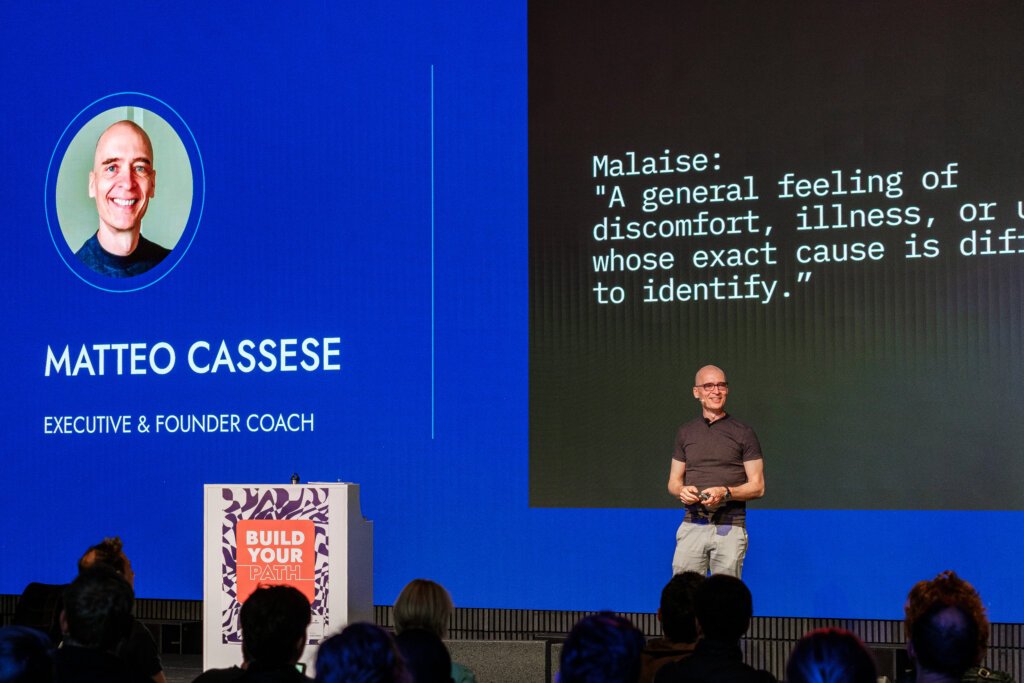
Matteo Cassese delivers keynotes for rooms at Messukeskus and Finlandia Hall where the silence after means you got through. Not applause. Something better.
In his own words: “I am a deep introvert and a stage animal. I can switch it on and make magic happen.”
“Matteo was one of the best speakers at the conference. He was exceptionally prepared and responsive before the event, and helped promote it. Plus delivered an exciting and valuable presentation, that kept the audience fully involved. We’re actually in the process of booking him for two more events.”
Yurii Lazaruk
Event & Community Architect, 9am
Keynote topics for Helsinki conferences
Every talk is customized. Matteo Cassese does not deliver the same keynote twice. But these are the five themes he keeps coming back to, because they are the five reasons leaders stop growing. Each one resonates differently in Helsinki’s substance-first business culture.
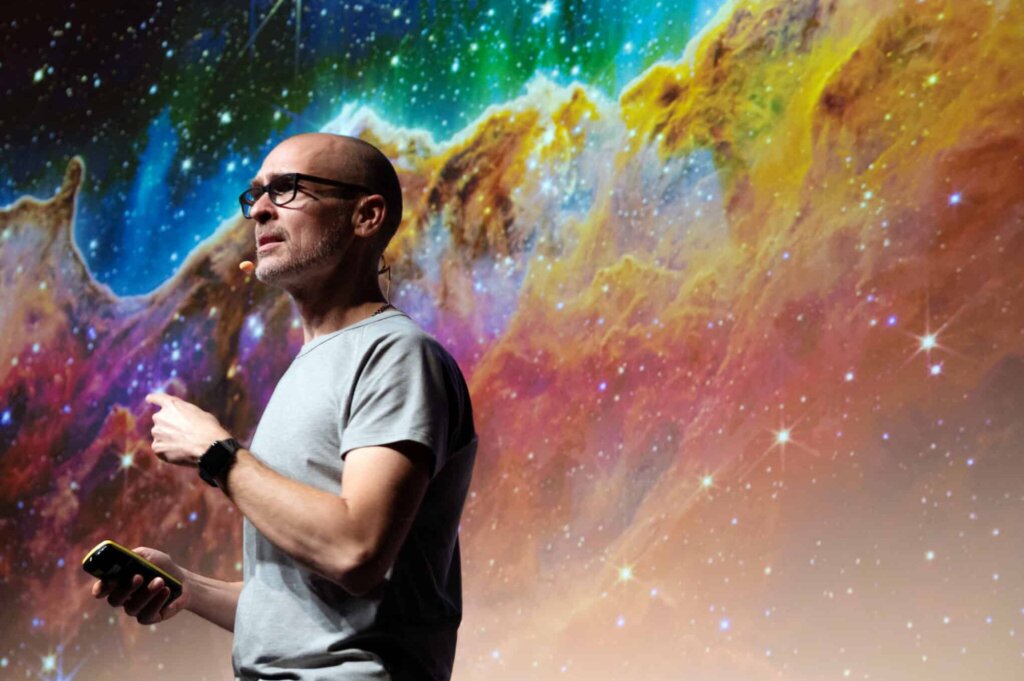
From Mal-AI-se to Ren-AI-ssance
The AI keynote built for Helsinki’s tech-forward ecosystem. From Slush to Arctic15, this city runs on founders who build with AI rather than talk about it. This talk addresses what everyone in the room is thinking but nobody is saying out loud.
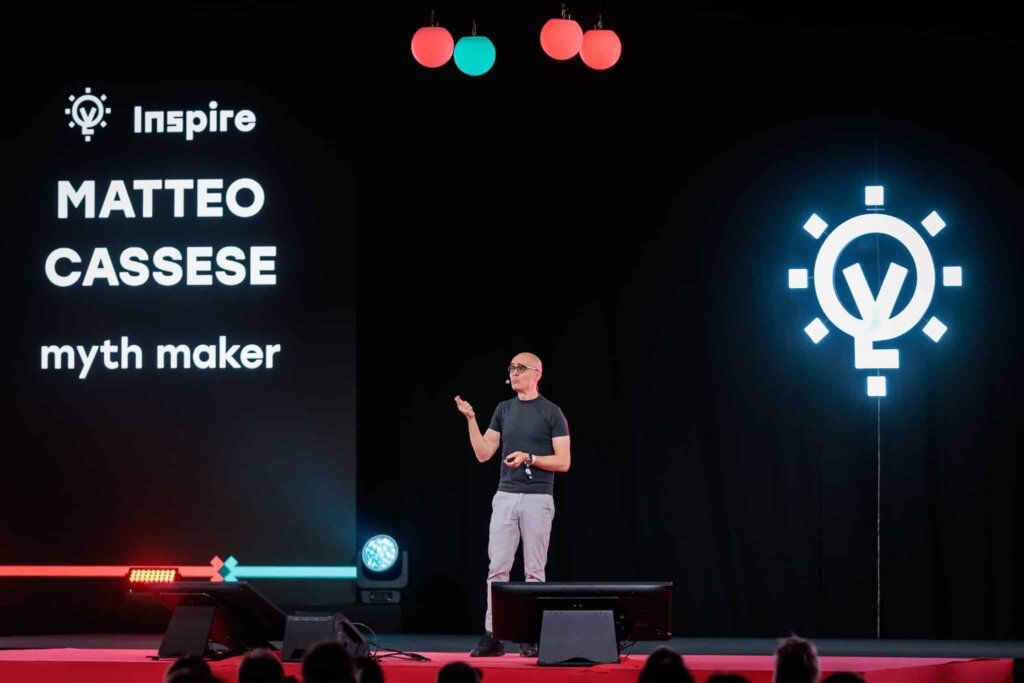
The Power of Discomfort
A leadership keynote for Helsinki, where sisu is the default but real growth requires confronting what you have been avoiding. Finnish audiences respect directness — this talk delivers exactly that, attacking the discomfort your leaders need to face.
The Confidence Paradox
Finnish leaders do not perform confidence — they demonstrate it through action. This motivational keynote reveals why the loudest voice in the room is usually the least certain, and what real confidence looks like in a culture that values quiet competence.
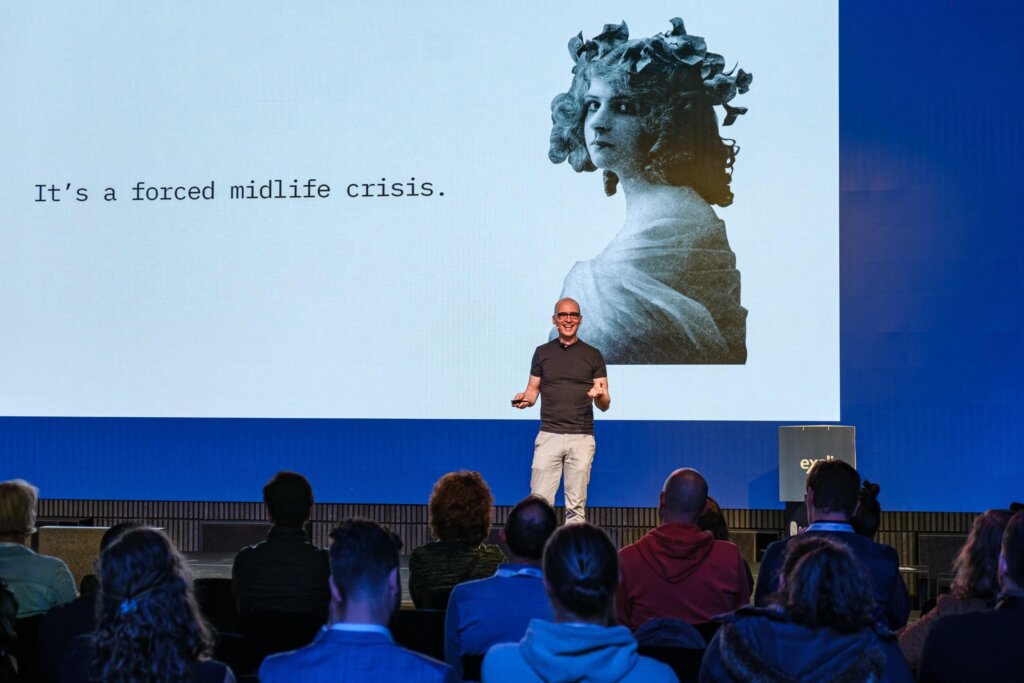
Every Curse Hides a Blessing
Helsinki knows reinvention better than any city in Europe. Nokia’s collapse did not destroy the ecosystem — it created one. This keynote is for corporate events during those pivotal moments when your worst chapter might be your greatest asset.
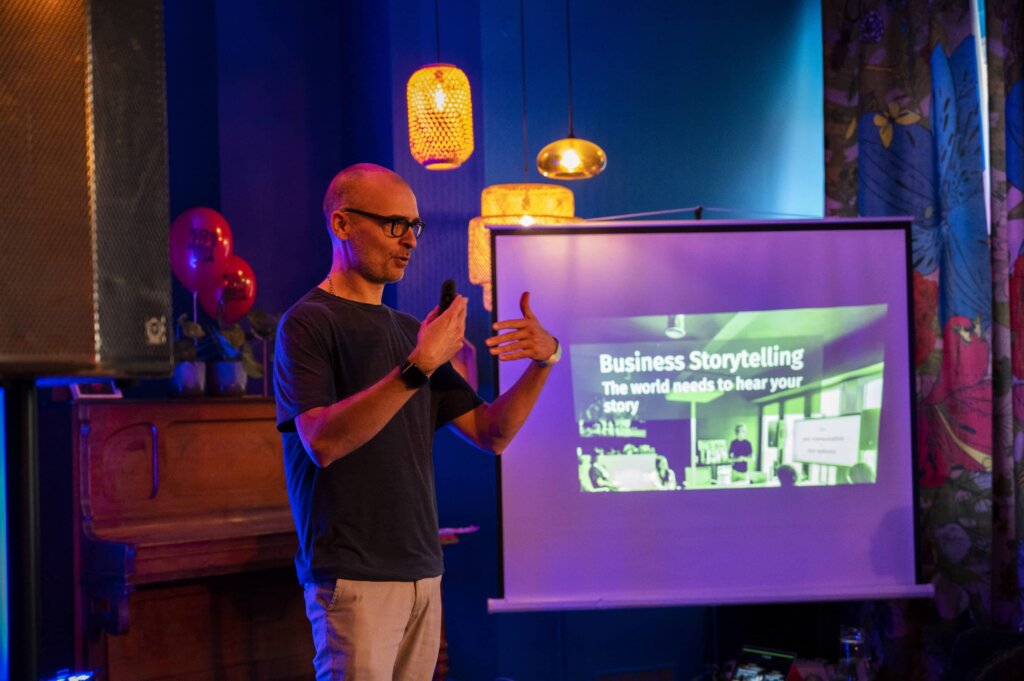
Storytelling Is Not What You Think It Is
In a city where Supercell, Wolt, and Rovio built global brands through story, the companies that win are the ones that tell better stories. This business storytelling keynote gets booked for marketing teams, leadership summits, and startup audiences across Helsinki.
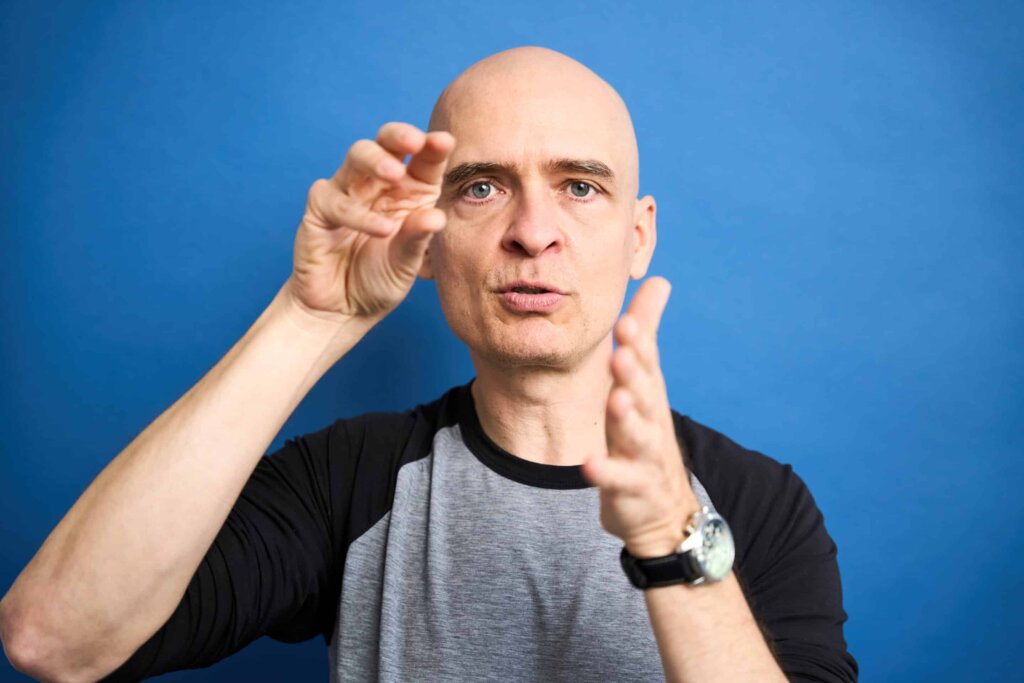
Keynotes that get leaders unstuck
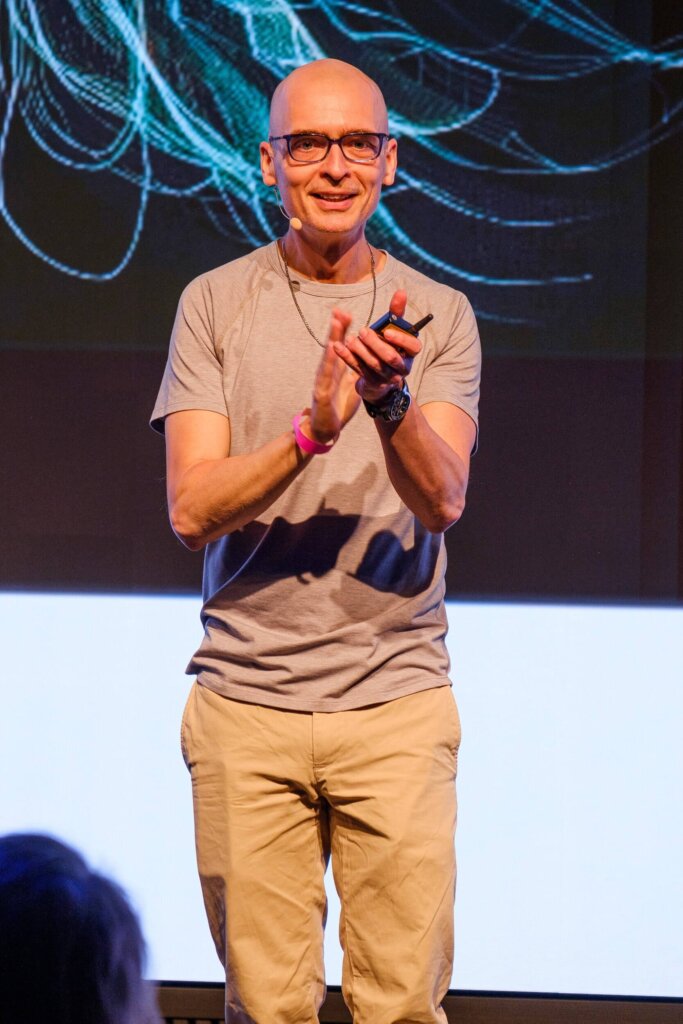
Matteo Cassese, international leadership keynote speaker, helps organizations see leadership differently. Not through motivation posters or five-step methods, but by going to the place most of us avoid to confront the real reasons leaders get stuck. Matteo Cassese brings over twenty years of experience to conferences, corporate events, and leadership retreats worldwide. His keynotes cover self-awareness, AI readiness, confidence, and storytelling. They don’t just inspire. They change how people think and act long after the event ends.
Change how your audience thinks
Leaders need new maps. The old ones don’t work anymore.
Matteo Cassese shows them how to navigate technological & social disruption using principles that never fail: building real confidence, telling better stories, understanding what drives them.
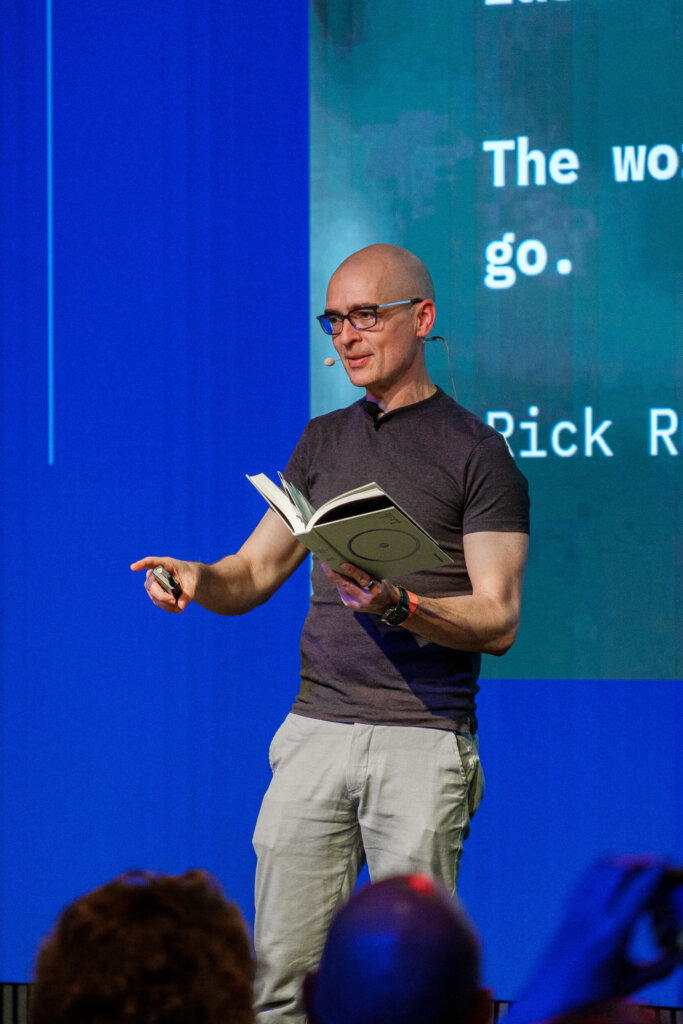
Pick your challenge
- AI making everyone anxious
- Teams burning out from change
- Confidence at an all time low
- Leaders don’t inspire
- Success feels hollow
Your audience leaves with tools they’ll actually use. Not another framework to forget.
What happens before, during, and after your Helsinki event
You’re not booking a speaker. You’re getting a partner for the entire arc of your event.
I don’t deliver the same talk twice. I build it around you.

Before the conference
- Personally attend and interact with you in up to 3 briefing calls
- Post to my socials and my email list about your event
- Shoot a promotional reel for you
- Promote your event on podcasts
- Write a blog post
- Host a live coaching session for your audience
At the conference
- Be there early
- Attend all talks on the day I speak
- Integrate insights from previous speakers into my talk
After the conference
- Ask-Me-Anything session for your audience (after the talk)
- Share full video of the talk on my socials
Trusted by leaders at companies that take their people seriously
Stages that matter

Book someone they’ll still be quoting next year
“There were at least 500 people in the room. I’m pretty sure your speech made an impact and triggered a mindset shift for each and every one of them. Amazing.”

Zeineb Mrabet
“Arguably the deepest talk of the entire conference. You could feel the energy in the room shift.”
Julian Farizi
“A deeply human experience. He presented the very opposite of a quick life hack and gave a feeling of confidence to everyone in the room. The takeaway was empowerment. What a feat.”

Gregor Müllegger
Senior Software Engineer
“The talk was easy to listen to, with a perfectly clear flow of discussion. What stands out most is the lasting impact: the audience leaves with a seed planted in their minds.”
Angela Violino
Brand Communication Designer, Doodle
“And then Matteo Cassese closed the show with his powerful stage presence, challenging us to rethink the future of work.”

Grazia Ravelli
“It was a pleasure to see you speak! In a world of template frameworks and growth playbooks, it was refreshing to hear someone call the chaos! I’m sure it inspired and energized many!”

Norman Schütt
“The first talk I’ll rewatch when the recordings are out is Matteo Cassese’s. Truly inspiring.”
Balach Hussein
Your insider guide to Helsinki conferences
Helsinki is a city of 650,000 people that produces startup density rivaling cities ten times its size. It is compact enough to walk between venues, direct enough to get straight to business, and home to an ecosystem that was forged when Nokia fell and thousands of world-class engineers started building their own companies. What follows is what an event planner needs to know to put a keynote event together in Finland’s capital.
Helsinki’s best conference venues for keynote events
Helsinki’s venue landscape reflects the city itself: architecturally distinctive, functionally excellent, and ranging from Alvar Aalto’s marble masterpiece to a former Nokia cable factory. Here are the rooms that matter for keynote events.
Messukeskus
Finland’s largest event venue. Seven exhibition halls, 58,000 square meters, and the Amfi Hall auditorium with 4,400 seats. This is where Slush fills 10,000 seats every November. Connected by train to Helsinki central station — one stop from Pasila. The venue you book when scale matters.
Finlandia Hall
Designed by Alvar Aalto and clad in Italian Carrara marble. Reopened in January 2025 after a three-year, 136 million euro renovation that respected every detail of Aalto’s original vision. Main concert hall seats 1,700. Congress wing seats up to 900. This is where 32 heads of state signed the Helsinki Declaration. The architecture is the statement.
Kaapelitehdas (Cable Factory)
A former Nokia cable factory turned cultural center. 56,000 square meters housing three museums, ten galleries, and event spaces that hold up to 2,500. Host venue for Arctic15, the startup-investor matchmaking conference. A sauna is on the premises. The venue that says “we are not a bank.”
Maria 01
The Nordics’ leading startup campus. A former hospital complex housing over 180 startups, 23 partner companies, and over 1,500 members. Events here carry insider credibility. Booking a keynote at Maria 01 means speaking to the startup community, not at them.
Oodi (Helsinki Central Library)
Opened in 2018, this architectural landmark sits opposite the Finnish Parliament on Kansalaistori Square. Multi-purpose event spaces, an auditorium for lectures, and glass-walled meeting rooms. An unconventional choice for a keynote that signals innovation over tradition.
Allas Sea Pool
Three pools, saunas, an open-air event stage, and a restaurant on the Market Square waterfront. Accommodates up to 2,000 for corporate events. The venue where “let us continue this in the sauna” becomes a literal agenda item. Summer events here feel unlike anything else in the Nordics.
Every startup ecosystem needs a catalyst. Silicon Valley had Fairchild Semiconductor. Helsinki had Nokia — not its rise, but its fall. When Nokia collapsed, it released thousands of world-class engineers who did not leave. They built Supercell, Wolt, Rovio, and 4,200 other companies. The ecosystem was not planned. It was forged.
What Helsinki audiences expect from a keynote speaker
A Finnish audience that sits quietly after a keynote is not disengaged. They are thinking. Do not mistake silence for disinterest. Finns use silence to process, formulate precise responses, and decide whether what they heard is worth acting on. The Q&A format does not match Finnish communication style — allow for hallway conversations instead, where specific, thoughtful questions will come one-on-one.
Finnish business culture values substance over style. Data over anecdotes. Frameworks over motivation. Well-prepared presentations where questions are not necessary because the content was thorough enough. Directness is respect, not rudeness. Exaggerations and hype are counterproductive — Finns will question your integrity if you oversell. Say what you mean. Deliver what you promise. That is what earns trust in Helsinki.
Punctuality is non-negotiable. If a session starts at 14:00, it starts at 14:00. Not 14:02. Finnish events start and end exactly on time. Running over is disrespectful. Running under is fine. Arriving five minutes early is the standard. On time means late.
Getting around Helsinki for your event
Helsinki is compact and walkable. Most conference venues sit within a 20 to 30 minute walk of each other. Finlandia Hall to Kaapelitehdas is about three kilometers. The city center is small enough that getting lost is difficult.
Helsinki-Vantaa Airport sits 20 kilometers north of the city. The Ring Rail Line (I and P trains) reaches Helsinki Central Station in 30 minutes, departing every 10 minutes during peak hours. Buy an ABC zone ticket — the airport is in zone C. Many visitors buy an AB ticket and get fined 100 euros. The HSL app covers trams, buses, metro, commuter trains, and even the Suomenlinna ferry, all on a single ticket system.
Trams are the backbone of city transport. Lines 3, 6T, 7, and 9 cover most event-relevant areas. The metro (two lines, M1 and M2) is useful for longer distances, especially to Espoo. For a quick orientation on arrival, ride tram line 2 end to end — it passes most major landmarks and helps you build a mental map of the city in about 30 minutes.
Helsinki’s event calendar: when to book and when to avoid
Helsinki has two variables that dominate event planning: daylight and the Finnish relationship with nature. Ignore either one and your attendance will suffer. Here is what to know month by month.
January – February
Deep winter. Around six to eight hours of daylight. Temperatures between minus five and minus fifteen degrees Celsius. Indoor events work well — Finns are built for this. The sauna-conference-dinner circuit is in full swing. Corporate planning events and strategy offsites are popular as companies begin their fiscal year. Good availability and reasonable hotel rates.
March – April
Days lengthen rapidly. Snow starts melting. Spring energy returns and corporate events pick up. April and May are popular for strategy offsites as teams prepare for the active half of the year. SHIFT Business Festival runs in Turku (two hours from Helsinki) in late May.
May
Nordic Fintech Summit draws over 700 attendees and 80 speakers. The city begins its transformation into summer mode. Outdoor terraces open. Daylight extends past 10 PM. One of the best months for events that combine conference content with the city at its most alive.
June
Arctic15 at Kaapelitehdas brings 1,200 participants, 500 startups, and 400 investors for the most effective startup-investor matchmaking event in Northern Europe. Nineteen hours of daylight. Helsinki is at its most beautiful. But beware: Midsummer (late June) is sacred — the entire country goes to their cottages. Do not plan events around Midsummer weekend. The city empties.
July – August
Summer continues. Finns who seemed reserved in winter become expansive. Outdoor events and waterfront stages become possible. August brings Helsinki Design Week — the largest design festival in the Nordics with over 250 events across the city. Summer attendance can be unpredictable as Finns escape to the countryside, but the atmosphere is unmatched.
September – October
The darkness arrives. Conference season begins in earnest as the ecosystem reconverges in the city. Corporate events ramp up. MarTech Nordic runs in October. Good hotel availability before the November rush. These months offer a sweet spot: audiences are focused, venues are available, and the city has not yet entered its peak event density.
November
The main event. Slush fills Messukeskus with over 13,000 attendees, 5,000 startups, and 3,000 investors on November 18 to 19, 2026. Junction hackathon runs the same month with 1,500 hackers from 111 nationalities. Slush is not just two days — it is a full week of 600 side events, dinners, VC meetups, and after-parties. If you are keynoting during Slush week, you are speaking to the decision-makers who fund and build the Nordic tech economy. Book hotels months in advance.
December
Post-Slush wind-down. Around six hours of daylight. Christmas markets and winter events. Atmospheric but cold. The city shifts into holiday mode. Good for intimate leadership retreats and end-of-year summits. Expect lower attendance for large-scale conferences.
The quick version: September through November is peak conference season in Helsinki. November is the summit because of Slush. May through June offers the best weather and summer energy. Avoid Midsummer weekend (late June) and expect lower attendance in July and August when Finns retreat to their summer cottages.
After the conference: where your team actually wants to go
Helsinki’s after-hours scene is defined by one thing no other city can match: sauna culture. In a country with 3.3 million saunas for 5.5 million people, “let us continue this in the sauna” is a legitimate business proposal. Finnish executives actually conduct relationship-building and informal negotiations in saunas. A sauna session followed by dinner will advance a relationship further than three formal meetings.
Löyly. The sauna you bring international guests to. Architectural landmark in Hernesaari designed by Avanto Architects, co-owned by actor Jasper Paakkonen. Three wood-fired saunas, year-round outdoor pool, and a restaurant serving seasonal Finnish fare. Named one of Time Magazine’s “World’s 100 Greatest Places.” Bathing suits required — which makes it accessible for non-Finns.
Kotiharjun Sauna. Helsinki’s last remaining traditional wood-heated public sauna, open since 1928 in the Kallio district. No Instagram aesthetics. Where Helsinkians actually go. If you want to understand Finnish sauna culture rather than just experience it, this is the place.
The market halls. Hietalahti Market Hall (built 1903, renovated 2012) is a multicultural restaurant hub with Japanese, Filipino, Vietnamese, and Italian options. Saturday evening “Music and Tasting” events with DJs. Hakaniemi Market Hall (reopened 2023) is the local’s choice with modern Finnish cuisine upstairs at Bistro Kirsikka.
Kallio. Helsinki’s answer to Berlin’s Kreuzberg. Three tram stops northeast of center, known for its bohemian art scene and laid-back nightlife. The party complex on Hämeentie — Siltanen, Kaiku, Kuudes Linja, Post Bar — is where Helsinki’s founders go when the nametags come off. Musta Kissa is the neighborhood institution. This is where the Slush after-party you want to find lives.
The Helsinki-Tallinn corridor: a twin ecosystem across the Baltic
A two-hour ferry ride connects Helsinki to Tallinn, Estonia. Ten daily departures. Business class lounges with WiFi and working space on board. Return tickets from 10 euros off-season to 60 to 80 euros in summer. The ferry itself has become a meeting venue — two hours with no distractions and the shared experience of crossing the Baltic.
This is not just a day trip. Estonia’s e-Residency program has attracted over 109,000 digital entrepreneurs. Tallinn houses 1,400 startups including the alumni networks of Wise, Bolt, and Pipedrive. Finnish startups use Estonian e-Residency for EU market entry. Estonian startups use Helsinki for Nordic venture capital access. The Helsinki-Tallinn corridor functions as a single ecosystem, and the smartest founders treat both cities as one market.
For event planners, the Tallinn day trip is the standard team-building option. Tallinn’s UNESCO Old Town is different enough to be interesting and close enough to be easy. Every event planner in Helsinki has done this. It works.
The mythmaker who decoded leadership
Matteo Cassese is an international keynote speaker, business coach, and mythmaker based in Berlin for over fifteen years.
Over two decades across tech, film, and consulting. From launching more than 140 films at Warner Bros. to advising Netflix, Sony, LinkedIn, and Heineken. Matteo Cassese has observed what truly makes leaders and what breaks them.
His keynotes do not just inspire. They transform. He blends psychology and myth to help leaders understand the hidden stories that drive their behavior, and how to change them.
On stage, something switches on. In his own words: “I am a deep introvert and a stage animal. I can switch it on and make magic happen.”
Whether speaking to a room of five hundred or guiding founders one-on-one, the mission is the same: to help people make meaning out of chaos, so they become someone new on the other side.
Frequently asked questions about booking a keynote speaker in Helsinki
What makes Matteo Cassese different from other keynote speakers in Helsinki?
Most keynote speakers booked for Helsinki events deliver polished motivational content that Finnish audiences see through immediately. Matteo Cassese does the opposite. He unsettles. Not to be provocative, but to be honest. Real change in how people lead does not come from inspiration — it comes from a shift in how they see themselves. That is what he does on stage, using mythology, psychology, and two decades of experience across startups, film, and corporate. Finnish business culture values directness and substance. Matteo delivers both. He has spoken at IFA, GITEX Europe, Alte Münze, and conferences across three continents. He knows what audiences who value quiet competence need: depth, not volume.

What keynote topics work best for Helsinki conferences?
Helsinki’s conference scene spans tech, gaming, design, and leadership. AI anxiety in the startup sector? “From Mal-AI-se to Ren-AI-ssance.” Leadership teams who have the sisu but need a new direction? “The Power of Discomfort.” A company navigating reinvention — the way Nokia’s alumni reinvented Helsinki? “Every Curse Hides a Blessing.” Marketing teams competing for global attention? “Storytelling Is Not What You Think It Is.” Each talk is customized to your industry and audience. None of them are delivered the same way twice.

How does Matteo customize the keynote for a Finnish audience?
It starts with a briefing call. Not a logistics call — a real conversation about your people, your industry, and the outcome you need. Finnish audiences value directness and substance, so the examples and frameworks must be practical, not performative. Matteo reviews your full program, researches your sector, and asks uncomfortable questions about what your audience actually needs to hear versus what they want to hear. The core ideas stay the same. Everything around them changes to land in a culture that respects honesty over polish.
Who books Matteo Cassese for Helsinki events?
Conference organizers, L&D managers, and leadership teams who need a speaker the room takes seriously. Corporate summits, technology conferences, startup events, and executive retreats. Audiences from 50 to 5,000. Matteo is based in Berlin and speaks across Europe, the US, Asia, and the Gulf. The booking starts with a briefing call to understand your event, your audience, and what needs to change in the room.
What is Slush and why does it matter for business events in Helsinki?
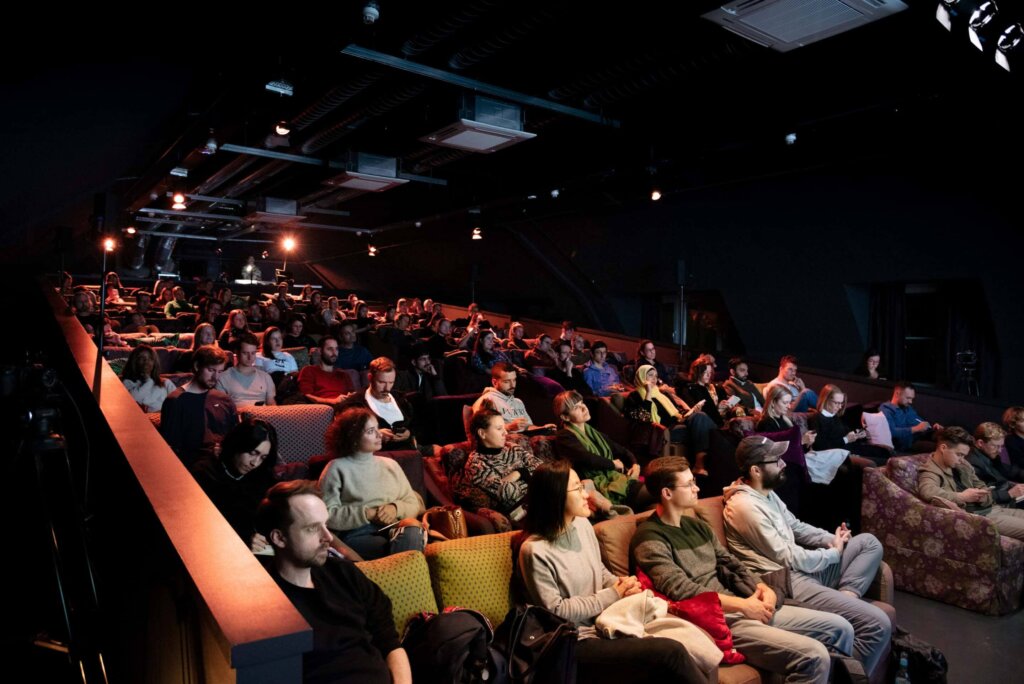
Slush is the startup conference that put Helsinki on the global map. Held every November at Messukeskus, it draws over 13,000 attendees, 5,000 startups, and 3,000 investors. Started by students in 2008, it is now one of the world’s most influential startup events. Slush is not just two days — it is a full week of 600 side events, dinners, and after-parties. The main stage is for inspiration. The real deals happen in investor lounges, curated dinners, and even the Day Zero sauna and ice dipping sessions. If you are keynoting during Slush week, you are speaking to the people who fund and build the Nordic tech economy.
What language are the keynotes in?
English. All keynotes are in English. Finland ranks among the top in Europe for English proficiency, placing 12th globally in the EF English Proficiency Index with a “Very High Proficiency” rating. In Helsinki business contexts, English is effectively universal — many companies use it as their primary working language. International speakers do not need translators or to simplify their language. Finnish business audiences handle complex English fluently.
What is the sauna etiquette for business visitors in Helsinki?
An invitation to sauna is a sign of trust and deeper relationship. Participation is always voluntary. Shower before entering. No phones. In traditional saunas, nudity is the norm, though mixed-gender or tourist saunas are flexible about swimsuits. Silence is fine — do not force conversation. Business discussions happen in the changing room or cooling-off area, not typically inside the sauna itself. Beer is acceptable in changing rooms, not in the actual sauna.

How far in advance should we book a keynote speaker for a Helsinki event?
For Slush week (November) and Arctic15 (June), book three to six months in advance. These are the peak windows and demand is high. For smaller corporate events or leadership retreats, six to eight weeks can work, but the earlier you reach out, the more can be done together before the event. Finnish event planners are thorough — they appreciate speakers who match that standard of preparation.
What support does Matteo provide before and after the keynote?
Every engagement starts with a discovery call. Matteo reviews your program and aligns on the brief. Before the event, he promotes it on his channels, shoots a promo reel, and writes a blog post. At the conference he is present before his slot — not backstage, but in the room, listening to other speakers. After the keynote, attendees get an Ask-Me-Anything session and follow-up resources. If you want to go deeper, one-on-one coaching sessions are available.
Does Matteo speak at events outside Helsinki?
Based in Berlin, but the work takes him across Europe, the US, Asia, and beyond. SXSW. IFA. GITEX. Reeperbahn Festival. Campus Party. InfoShare. Cities big and small: London to Lisbon, Prague to Paris, Berlin to Helsinki. Travel is handled as part of the booking and confirmed when we sign.
Can Matteo combine the keynote with a coaching session?
Matteo’s zone of genius is the stage and one-on-one coaching. He does not offer workshops. But he knows great facilitators who pair well with an inspiring keynote to deliver a session for your leadership team. A keynote for the full audience followed by focused coaching for a smaller group who want to go deeper — that is the model that creates lasting impact.
How do I start the booking process?
Hit “Put your date on hold.” That is not a commitment. It is a conversation starter. You tell Matteo the date, the location, and what you are building. He will tell you if he is available and whether what you need is something he can do well. If it is a fit, the next step is a brief and a proposal. If it is not, he will refer a colleague who would be a better fit. No intermediaries. You talk to Matteo directly.
Transform your Helsinki event with an unexpected “aha” moment
Every Matteo Cassese keynote reveals the hidden patterns keeping your leaders stuck. And shows them how to break free. Your audience will not just be inspired. They will be different.
About
Keynote Speaker Helsinki is a professional speaking service by Matteo Cassese, offering customized keynotes on AI transformation, leadership confidence, business storytelling, and personal growth for conferences, corporate events, and leadership summits in Helsinki and worldwide.
Related
- Provider: Matteo Cassese (Person)
- Related: Professional Speaker (Service)