

By Matteo Cassese. I coach founders on the story underneath the pitch. One of them raised EUR 5 million after we rebuilt his.
Your pitch is not unclear. It is untranslated. You understand the business. The investor in the room does not. Not yet. I can help you download the complexity in your mind and translate arcane technical, financial and scientific ideas into storytelling that’s easy to digest. You cannot hide behind product or data anymore. Your company is you now. Architect the strategic narrative. Clarify the vision. Package it into a story that lands.
Your Pitch Isn’t Unclear. It’s Untranslated.
Here is what that looks like. Typically founders know too much about what they’re building and what they’re doing, so they are unable to be concise. Then they are too involved in the how it works to actually tell me why it exists. What I love to do with founders and executives is get to the core of the mission and vision first, and make sure that the mission and vision are so crystal clear that everything else derives from them.
He dives into the technical weeds, helping me as a technical founder translate complexity into a clear narrative, ensuring the market understands the value we are building.
Ged Ossmann, Interf.com
That gap between what you know and what others hear is exactly where I work.

A strategic narrative is the one story that holds everything together. Your pitch, your website, your hiring page, your keynote. Not a tagline. Not a mission statement. A living structure that makes every audience hear the same truth about your company, told the way they need to hear it.
What Investors Are Actually Listening For
Investors buy into the founder. Investors don’t want a pretty pitch. Even though the industry has standardized the investor deck format, the investor is looking for alignment. They’re looking for the alignment of the founder with the product, of the founder with the vision, and they’re looking for the capacity of the founder to push their ideas into the world. This is what is being tested in the moment we call pitch.
Understand who you are talking to, what you need to tell them, and why. Your team wants to be inspired. Investors want to be persuaded. New hires want to be motivated. VCs look to invest in founders, not just ideas.
Define who you are and what you want. What drove you to your current position, and what’s driving you beyond that?
Before you touch the deck again, ask yourself:
- After your pitch, could the person in the room explain your business to someone else in two sentences?
- Do you feel ready?
- Do you know what to do?
Mario Raised EUR 5M by Changing Nothing About His Business
Mario Morante runs Harbiz. We worked on his pitch. I did not change what he built. I translated it.
Working with Matteo was a game-changer. He helped refine my pitch structure, teaching me how to shape it like a compelling story and identify which key elements deserved emphasis. Through his guidance, I learned how to direct my listeners’ attention precisely to where I wanted it, and I gained an understanding of how my objectives could shift depending on the audience. Thanks to his invaluable support, I was able to open doors with European investors that ultimately led to closing a EUR 5 million funding round.
Mario Morante, Co-founder and CEO, Harbiz
Only the story changed.
Directing Attention Is the Whole Skill
The skill Mario named is directing attention. I call it founder communication coaching.
Your job is to resonate, to tune into a specific frequency (imagine rotating the dial of an old radio), and make your audience “vibrate” in a similar way an opera singer can make a glass vibrate (and eventually shatter).

Tell me what’s in it for me. What do I get, do I get smarter, do I get more attractive. Attention is not a given, attention is a transaction.
Same tools. Same data. Same playbook. The only variable left is you. The story you prepared is a map. The room is the territory. The territory always wins.
The Part Nobody Tells You About Pitching
You must take the stage like you own it. You must persuade and convince.
The best pitch is no pitch at all. The best pitch is: listening, being present, showing empathy, demonstrating genuine curiosity, showing your expertise, coaching your client to make the most informed decision. In one word: leading is the best pitch.
Talking from the heart. True confidence comes from showing up as yourself. Being willing to be vulnerable instead of hiding. Jumping head first into conflict instead of avoiding it.
No slide fixes that. No template teaches it.
Why Slide Templates Don’t Fix This
The answer to bad slides is not better slides. But better stories. A slide invites you to add bullet points. A narrative memo requires you to think in terms of a story.
Quantity is not thoroughness. It is a defense mechanism. If you cannot say it in plain language, you do not yet understand it well enough.
Most coaches help you perform. I want you to transform your communication into a strategic asset. One story that works in the deck, on the website, and in the room.
Common Questions About Pitching to Investors
How do you structure an investor pitch?
Investor pitch coaching is focused work on the narrative you bring into the room when the money is on the table. We build your investor memo, your deck story, and the way you handle the Q&A that follows. The goal is not to perform. The goal is to walk in knowing exactly who you are and what truly matters.
How long should a pitch be?
One minute of clarity beats a hundred pages of brilliance. Investors skim. Customers scan. Hires have options. They reward clarity and storytelling. The pause is not dead air. It is the moment the idea lands.
What do investors care about most?
Not the spreadsheet. Not the TAM slide. Not the competitive landscape matrix. They buy into the person sitting across from them, and whether that person can make them believe. They will test your authenticity and integrity.
Why do technical founders struggle to pitch?
All the time. Technical founders often have the deepest understanding of what they’re building and the hardest time explaining it to someone who doesn’t share that depth. Your instinct is 90% solution and 10% problem. If you spend just more time telling me the ins and outs of this problem, even if you go long and you’re a bit confusing, your pitch is already like five times better.
How long does it take to prepare?
Most founders I work with go from scattered to sharp in five to ten sessions. Some need one session to unlock what was already there. With some I am working for a few months. It depends on how clear you are about what you’re building, and how willing you are to let go of the version that isn’t working.
What’s the difference between a pitch and a narrative?
A pitch is just a document. Your audience matters much more than any document. Talk to them. Most business communication fails not because the data is weak, but because the story is missing. Numbers prove a point. Stories move people.
What to do next
Start with the business storytelling guide for the underlying method. Then book the intro call. Tell me what story you want to tell. I’ll tell you if I’m the right person to help you tell it. Everything I offer is fully and immediately refundable if you don’t get any value from it.
What you should do next
Discover what’s holding you back from the inside out. Understand where you naturally have leverage and where it eludes you.
Take the free founder mindset course.
Tell me where you want to go. I’ll tell you how we get there.
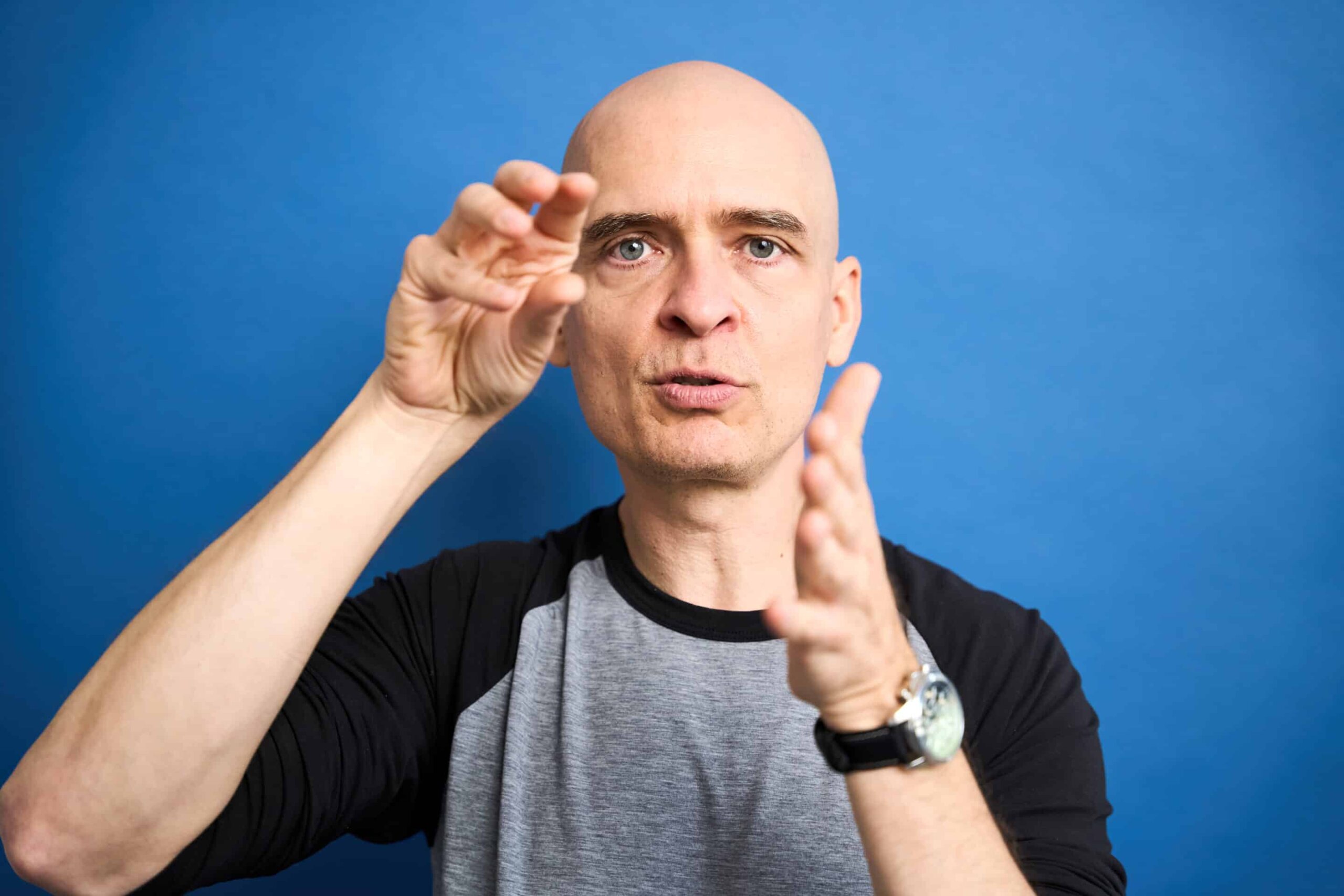
About Matteo Cassese
Business coach, keynote speaker, and mythmaker, Matteo helps leaders thrive in chaos and conflict. Twenty years across tech, film and consulting, seven of them at Warner Bros., founding-team at Netflix Italy, and advisory work for Sony, LinkedIn and Heineken. His unique perspective as a queer nerd passionate about mythology and technology creates a safe space for leaders to be vulnerable and reach their full potential. Read more about Matteo.