
Lisbon stages and spaces I know from the inside
MEO Arena. FIL — Feira Internacional de Lisboa. Centro de Congressos de Lisboa in Belém. The Unicorn Factory at Beato. Pavilhão Carlos Lopes. The Innovation and Design Building at Parque das Nações. Stages from fifty people to twenty thousand.
I partner with the Beato Innovation District. This is not a city I visit. It’s a city I work in.
The airport is inside the city. Five to seven minutes to Parque das Nações, where most major conferences happen. That changes everything for a conference organizer.
“Matteo was one of the best speakers at the conference. He was exceptionally prepared and responsive before the event, and helped promote it. Plus delivered an exciting and valuable presentation, that kept the audience fully involved. We’re actually in the process of booking him for two more events.”
Yurii Lazaruk
Event & Community Architect, 9am. Freelance Unlocked, Berlin.
Keynote topics for Lisbon conferences
Every talk is customized. I don’t deliver the same keynote twice. But these are the five themes I keep coming back to, because they are the five reasons leaders stop growing. Each one hits differently in a city that reinvented itself from the ground up.

From Mal-AI-se to Ren-AI-ssance
The AI keynote for Lisbon’s tech ecosystem. Oeiras Valley houses Google, Oracle, Cisco, SAP, and Samsung — plus fourteen homegrown unicorns. This talk addresses what everyone in the room is thinking but nobody is saying out loud.
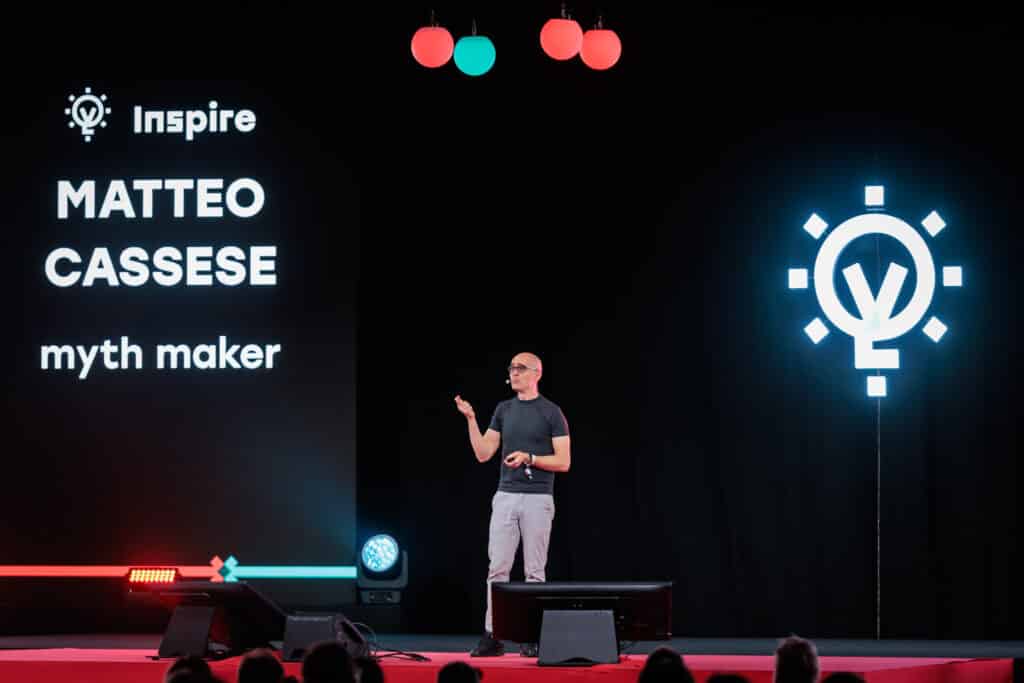
The Power of Discomfort
A leadership keynote built for a city that knows reinvention. Portugal rebuilt from financial crisis to European Capital of Innovation in a decade. This talk attacks the discomfort your leaders are avoiding — the painful questions that could transform your business.
The Confidence Paradox
Lisbon’s startup scene is full of founders performing confidence. Pitch decks polished to perfection, but something hollow underneath. This motivational keynote reveals the paradox that changes everything about how you recognize a truly confident leader.
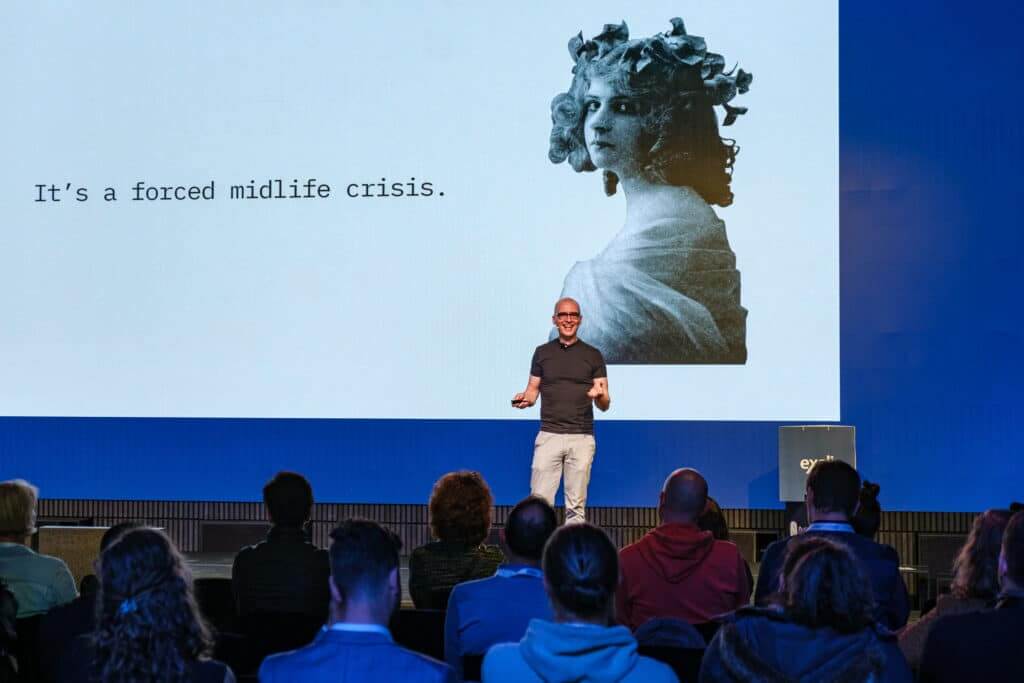
Every Curse Hides a Blessing
Portugal went from economic crisis to producing fourteen unicorns — OutSystems, Talkdesk, and more. This keynote is for the moments when your worst chapter might be your greatest asset.
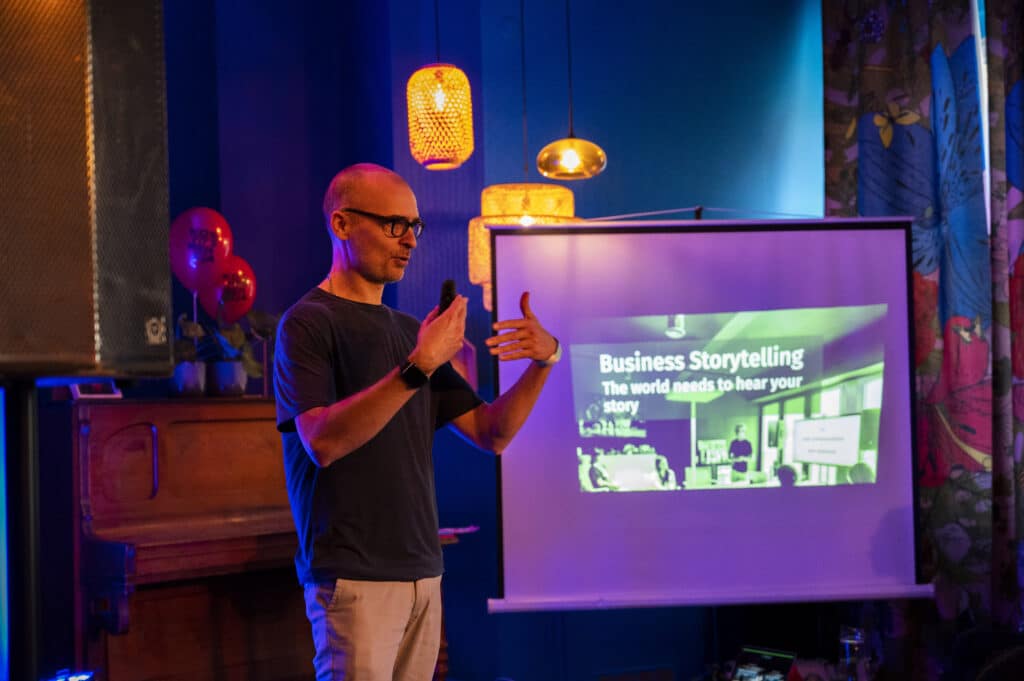
Storytelling Is Not What You Think It Is
I’ve delivered storytelling workshops to founders in Lisbon’s Beato Innovation District. This is the business keynote that gets booked for marketing teams and leadership summits. Warner Bros. and Netflix alumni on the same stage.
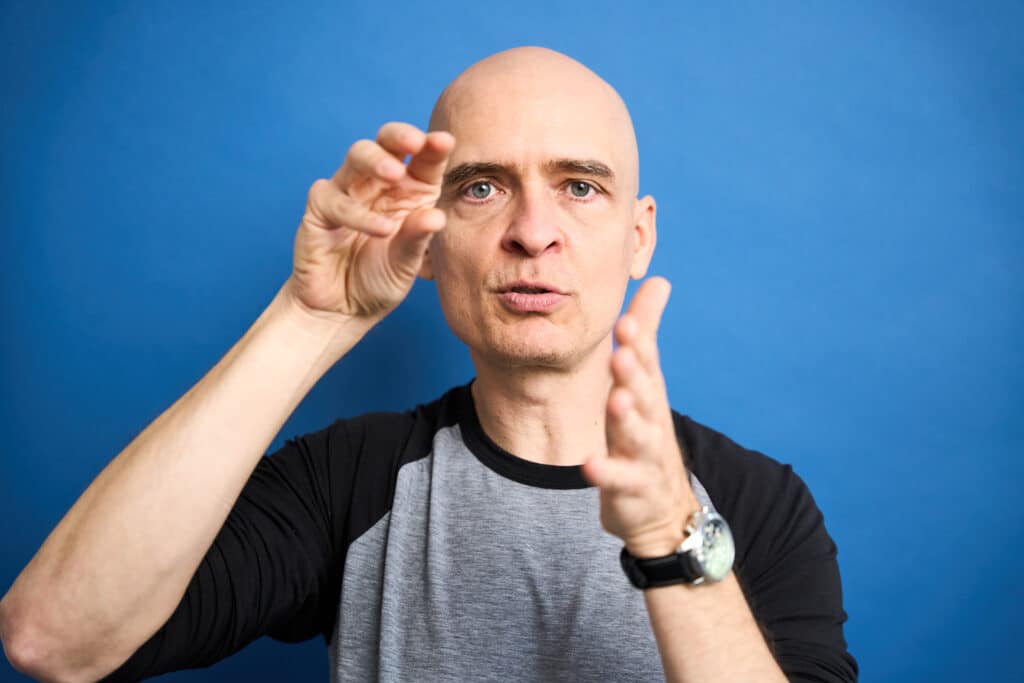
Keynotes that get leaders unstuck
Matteo Cassese, international leadership keynote speaker, helps organizations see leadership differently. Not through motivation posters or five-step methods, but by going to the place most of us avoid to confront the real reasons leaders get stuck. Matteo Cassese brings over twenty years of experience to conferences, corporate events, and leadership retreats worldwide. His keynotes cover self-awareness, AI readiness, confidence, and storytelling. They don’t just inspire. They change how people think and act long after the event ends.
Change how your audience thinks
Leaders need new maps. The old ones don’t work anymore.
Matteo Cassese shows them how to navigate technological & social disruption using principles that never fail: building real confidence, telling better stories, understanding what drives them.
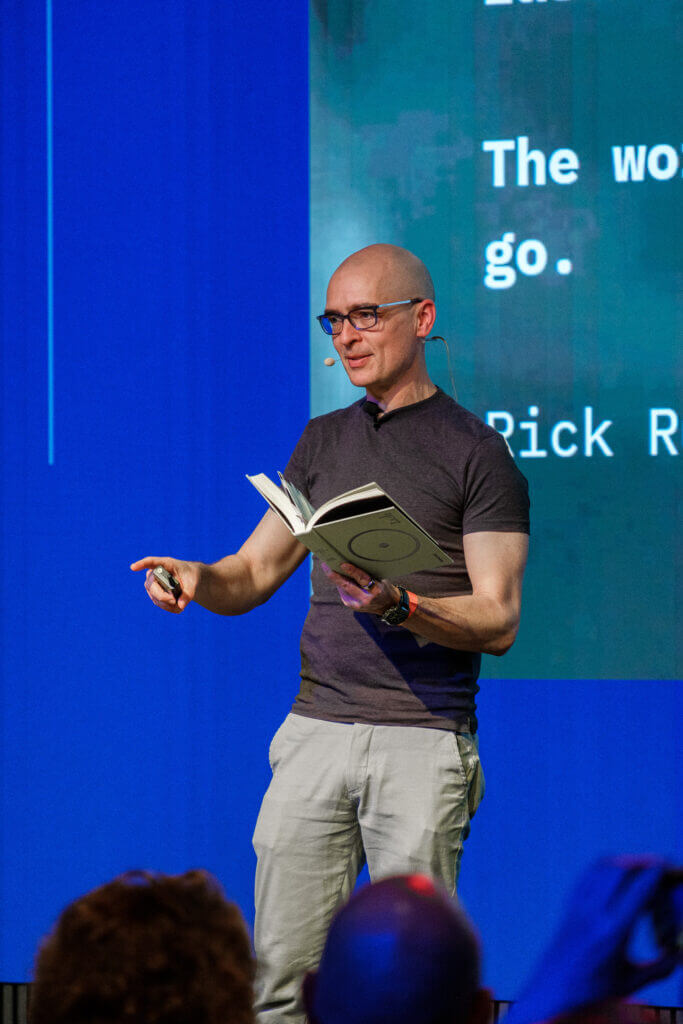

Pick your challenge
- AI making everyone anxious
- Teams burning out from change
- Confidence at an all time low
- Leaders don’t inspire
- Success feels hollow
Your audience leaves with tools they’ll actually use. Not another framework to forget.
What happens before, during, and after your Lisbon event
You’re not booking a speaker. You’re getting a partner for the entire arc of your event.
I don’t deliver the same talk twice. I build it around you.

Before the conference
- Personally attend and interact with you in up to 3 briefing calls
- Post to his socials and his email list about your event
- Shoot a promotional reel for you
- Promote your event on podcasts
- Write a blog post
- Host a live coaching session for your audience
At the conference
- Be there early
- Attend all talks on the day he speaks
- Integrate insights from previous speakers into his talk
After the conference
- Ask-Me-Anything session for your audience (after the talk)
- Share full video of the talk on his socials
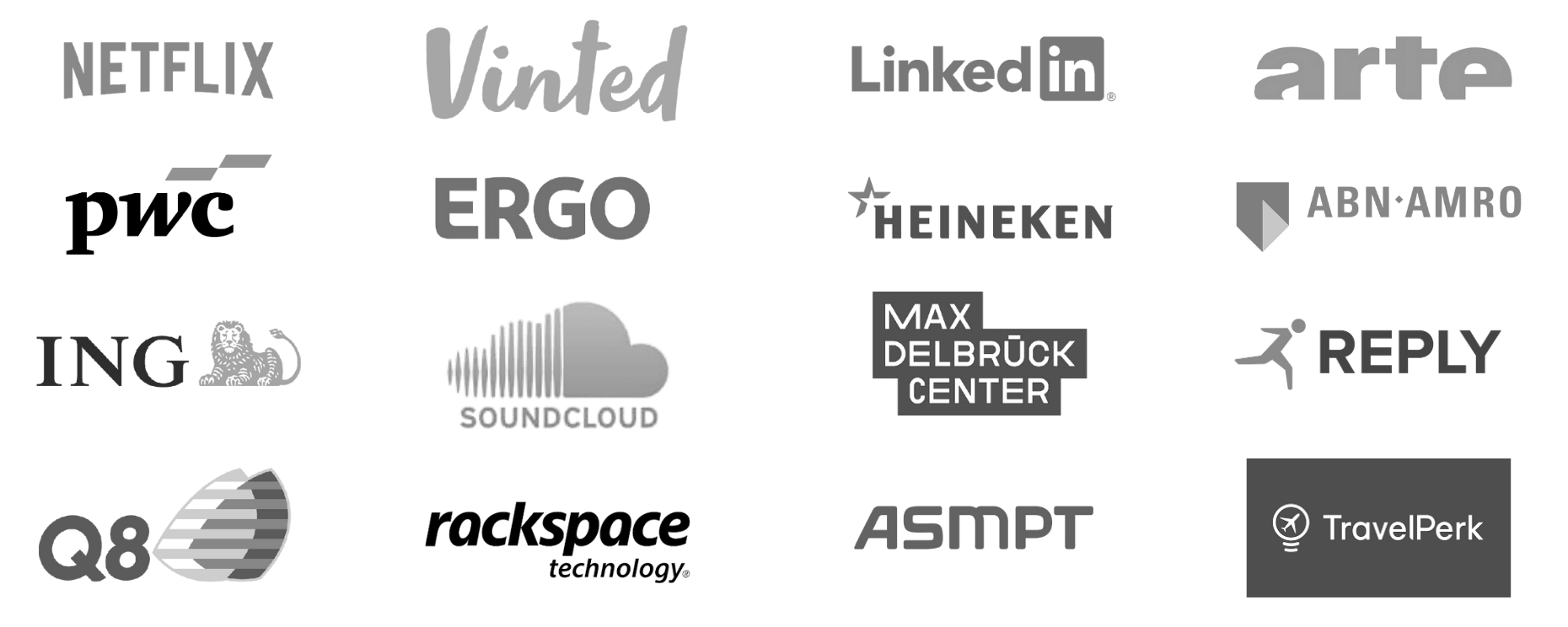
Trusted by leaders at companies that take their people seriously
Stages that matter

Book someone they’ll still be quoting next year
“There were at least 500 people in the room. I’m pretty sure your speech made an impact and triggered a mindset shift for each and every one of them. Amazing.”

Zeineb Mrabet
“Arguably the deepest talk of the entire conference. You could feel the energy in the room shift.”
Julian Farizi
“A deeply human experience. He presented the very opposite of a quick life hack and gave a feeling of confidence to everyone in the room. The takeaway was empowerment. What a feat.”
Gregor Müllegger
Senior Software Engineer
“The talk was easy to listen to, with a perfectly clear flow of discussion. What stands out most is the lasting impact: the audience leaves with a seed planted in their minds.”

Angela Violino
Brand Communication Designer, Doodle
“And then Matteo Cassese closed the show with his powerful stage presence, challenging us to rethink the future of work.”

Raissa Colonetti
“It was a pleasure to see you speak! In a world of template frameworks and growth playbooks, it was refreshing to hear someone call the chaos! I’m sure it inspired and energized many!”

Balach Hussein
“The first talk I’ll rewatch when the recordings are out is Matteo Cassese’s. Truly inspiring.”
Jan Behrens
Your insider guide to Lisbon conferences
I’ve been coming to Lisbon regularly for years. I run workshops here. I have a network here. What follows is what I’d tell you over coffee if you asked me where to put your next event.
Lisbon’s conference venues — and the ones that surprise you
Lisbon ranked second globally for hosting international congresses in 2024 (ICCA rankings). The conference infrastructure is world-class. Here’s what I know about the ones that matter.
MEO Arena
Twenty thousand capacity in Parque das Nações. Built for Expo ’98 on what was an oil refinery and slaughterhouse thirty years ago. Now the largest indoor arena in Portugal and the main stage for Web Summit. Five to seven minutes from the airport by metro.
FIL — Feira Internacional de Lisboa
One hundred thousand square metres of exhibition and congress space, next door to MEO Arena. Hosts Web Summit’s exhibition halls, BIO-Europe Spring, the World Aviation Festival, and Portugal Smart Cities Summit. Also where the 2010 NATO Lisbon Summit was held. If your event needs scale, this is where it happens.
Centro de Congressos de Lisboa (CCL)
In Belém, on the riverfront, with the Jerónimos Monastery and Torre de Belém as your backdrop. Eight auditoria, thirty-four meeting rooms. The venue of choice for high-prestige academic and institutional events. Different energy from Parque das Nações — quieter, more monumental.
Pavilhão Carlos Lopes
In Parque Eduardo VII, the green spine of central Lisbon. A beautifully restored pavilion named after Portugal’s Olympic marathon gold medalist. Home to Building the Future, the government’s flagship digital transformation conference. Intimate scale, architecturally notable.
Unicorn Factory Lisboa
Inside the Beato Innovation District — one of Europe’s largest creative and entrepreneurial hubs, built inside a former military pasta factory. Fifty thousand square metres across eighteen buildings. This is where I run workshops. It’s a destination, even though it’s not on the metro yet. Financial Times ranked it among the top ten European startup hubs in 2024.
Convento do Beato
A sixteenth-century convent, also in Beato, now an events space for up to two thousand people. Used for ETHGlobal and creative industry events. The kind of venue that makes your attendees take photos before the first session starts.
Innovation and Design Building (IDB)
Sixty thousand square metres near Parque das Nações. A former automotive industry hub, now home to tech companies and startups. Close to FIL and the conference district. Different from Beato — corporate scale, modern infrastructure.
LX Factory
A nineteenth-century textile mill in Alcântara, deliberately occupied on a temporary lease — the land under it is slated for development. The creative hub was built with the full knowledge it might disappear. Bookshops, restaurants, design studios, and event spaces. Not a renovation. A deliberate act of impermanence. If your side event needs creative energy, this is the room.
“Lisbon is a city of the old and the new together. It’s an industrial city. It’s a historical city. It used to be the centre of the world and it shows it.”
Getting here and getting around
Lisbon Humberto Delgado Airport sits inside the city — seven kilometres from the historic centre, five minutes by metro to Parque das Nações. Direct flights from every European capital plus transatlantic connections to North America and Brazil. For a conference organizer, this is one of the shortest airport-to-venue transfers in Europe.
The metro connects the old town to Parque das Nações and most of the city. Beato and Marvila — where the Unicorn Factory and Convento do Beato are — are a short taxi ride but not yet on the metro. Plan transport for attendees if your event is in Beato.
The train to Cascais runs along the Tagus and opens up the Oeiras Valley corridor: Taguspark (Google, Oracle, Cisco, Dell, Samsung, SAP — one hundred and sixty companies, sixteen thousand workers), Lagoas Park (seventeen Fortune 500 firms including HP, Ericsson, Nokia, Procter & Gamble), Nova School of Business and Economics in Carcavelos, and Cascais itself — super premium, thirty minutes from the city. Keep going north and you reach Ericeira, with its own cluster of innovation incubators.
Lisbon’s event calendar — when to book and when to avoid
March
Building the Future at Pavilhão Carlos Lopes (digital transformation, 3,000+ attendees). Lisbon Energy Summit at FIL (2,000+ attendees, renewable energy). BIO-Europe Spring at FIL (3,700+ life sciences executives). Spring is dense — book hotels early.
April
The sweet spot for smaller events. Startup Summit Lisbon at Unicorn Factory (5,000 founders and investors, 150+ speakers). Digital Marketing Europe (500+ attendees, 30+ countries). Lisbon AI Summit at Congress Centre (1,600 delegates). HR Week Lisbon (future of work, AI × HR). Good weather, good availability outside the big events.
May
Portugal Smart Cities Summit at FIL (4,000+ visitors, 250 exhibitors). UXLx at FIL Meeting Centre (user experience design, 16th edition). Weather warming up. Tourist season beginning.
June
Productized Conference at the Museum of the Orient (product management, practitioner-first). Summer heat arrives. Corporate event season peaks before the July slowdown.
September–October
The autumn surge. SBC Summit at FIL and MEO Arena (30,000–40,000 attendees — one of Lisbon’s largest events). Fintech Meetup Europe (2,500+ attendees, inaugural European edition in 2026). World Aviation Festival at FIL (4,500+ attendees). Lisbon AI Week across multiple venues. Hotel prices spike for the biggest events.
November
Web Summit. Seventy thousand attendees from one hundred and sixty countries. Nine hundred speakers. Two thousand startups. November 9–12 in 2026. This is the event that defined Lisbon as a global tech destination. Portugal Tech Week wraps around it with two hundred satellite events across the city. If your event is near Web Summit dates, book twelve months ahead.
The quick version: April and early May are the best months. June and November’s first half are strong. September–October is expensive. Web Summit week is its own universe.
After the conference — where your team actually wants to go
The food. Lisbon is in the middle of a food renaissance because of some of the best seafood in Europe and a genuine culture of cooking well. Cantinho do Avillez by chef José Avillez in Parque das Nações for contemporary Portuguese. Fifty Seconds in the Vasco da Gama Tower for Michelin-starred dining with river views. Senhor Peixe for fresh fish delivered daily from Setúbal. In the old town, the restaurants that don’t have English menus are usually the best ones.
The culture. Just seeing the buildings covered in azulejos puts you in a different mood. The MAAT (Museum of Art, Architecture and Technology) sits on the riverfront in Belém. The Museu Nacional de Arte Antiga has one of the finest collections in southern Europe. And then there’s fado — not a performance for tourists, but a living art form born in Mouraria, which is now Lisbon’s most ethnically diverse neighbourhood, home to fifty nationalities.
The geography. Take your attendees to Belém — the Jerónimos Monastery, the Tower, the Monument to the Discoveries. Or take the train to Cascais and watch the Tagus become the Atlantic. Sintra is forty minutes away and feels like another century. The city gives you options that most conference destinations don’t — culture, coast, and history within an hour.
The unexpected side of Lisbon
The earthquake that invented modern science. On November 1, 1755, Lisbon was destroyed by one of the most powerful earthquakes in European history. The Marquis of Pombal responded not with prayer but with data — sending a thirteen-question survey to every parish in Portugal. No mention of God. Six hundred and forty-six responses. Scientists still use those answers today to reconstruct the tsunami’s reach. This is considered the founding act of modern seismology. The city that was rebuilt afterwards — the Pombaline grid in Baixa — used a structural system called the gaiola pombalina: a three-dimensional wooden cage inside masonry walls, inspired by shipbuilding logic. Engineers tested it by having soldiers march around a prototype to simulate tremors. Some of those buildings are still standing.
The conference district was built on poison ground. Parque das Nações — where MEO Arena and FIL stand today — was an oil refinery, gas holders, and a slaughterhouse thirty years ago. The entire site had to be decontaminated of heavy metals before Expo ’98 could open. The conference infrastructure of modern Lisbon was literally built on remediated industrial land. It’s a metaphor event planners can use.
The startup campus in the pasta factory. The Unicorn Factory at Beato occupies two former Portuguese army factories — one produced pasta, the other was a military printing press. The City of Lisbon invested eighteen million euros and handed management to Startup Lisboa. The most prominent startup campus in Portugal started in a place that made spaghetti for soldiers.
The street art is policy, not decoration. Lisbon City Council made a deliberate decision to commission public murals as urban regeneration infrastructure. Vhils (Alexandre Farto), Lisbon’s most internationally recognized artist, works not with paint but with drills and chisels — carving into walls to expose the historical layers beneath. He describes it as archaeological. The model has influenced other European cities’ public art policy.
The digital nomad backlash. Portugal’s Non-Habitual Resident tax regime (2009) and digital nomad visa (2022) made Lisbon the top-ranked nomad city in Europe. By 2023, fifteen thousand eight hundred nomads were officially registered. The result: twenty thousand apartments converted to Airbnb, sixty percent of properties in some neighborhoods removed from the housing market, and violent anti-tourism protests. The prime minister abolished the NHR program in September 2023. Monthly nomad arrivals collapsed by eighty-six percent. A fully documented case study in unintended consequences — and a conversation starter at any conference about scaling, regulation, or growth.
The mythmaker who decoded leadership
Matteo Cassese is an international keynote speaker, business coach, and mythmaker who has called Berlin home for fifteen years.
Over two decades across tech, film, and consulting. From launching more than 140 films at Warner Bros. to advising Netflix, Sony, LinkedIn, and Heineken. Matteo has observed what truly makes leaders and what breaks them.
His keynotes don’t just inspire. They transform. He blends psychology and myth to help leaders understand the hidden stories that drive their behaviour, and how to change them.
A queer nerd passionate about mythology, technology, tarot, fitness, nature, and cars. On stage, something switches on. In his own words: “I am a deep introvert and a stage animal. I can switch it on and make magic happen.”
Whether speaking to a room of five hundred at the Unicorn Factory or guiding founders one-on-one, the mission is the same: to help people make meaning out of chaos, so they become someone new on the other side.
Frequently asked questions about booking a keynote speaker in Lisbon
What makes Matteo different from other keynote speakers in Lisbon?
He’s not flying in from London or Dubai with a Wikipedia paragraph about your city. He runs workshops at the Unicorn Factory in partnership with Lisbon’s Beato Innovation District. He has a network here. Most speakers motivate. Matteo unsettles — not to be provocative, but to be honest. Real change in how people lead doesn’t come from inspiration. It comes from a shift in how they see themselves. That’s what he does on stage, using mythology, psychology, and two decades of experience in startups and corporate.
What keynote topics work best for Lisbon conferences?
It depends on what your audience is struggling with. AI anxiety in the tech sector? “From Mal-AI-se to Ren-AI-ssance.” Leadership teams performing confidence instead of having it? “The Confidence Paradox.” A company going through restructuring or market shift? “Every Curse Hides a Blessing.” Marketing and communication teams that need to cut through noise? “Storytelling Is Not What You Think It Is.” Founders pushing through discomfort? “The Power of Discomfort.” Each talk is customized to your industry and audience. None of them are delivered the same way twice.
How do you customize the keynote for our audience?
It starts with a briefing call. Not a logistics call. A real conversation about your people, your industry, and the outcome you need. I review your full program. I research your sector. I ask uncomfortable questions about what your audience actually needs to hear versus what they want to hear.
Who books you for Lisbon events?
Conference organizers, L&D managers, and leadership teams. Companies like Netflix, PwC, LinkedIn, Heineken, SoundCloud, and Personio. Corporate leadership summits, technology conferences, startup events, executive retreats. Audiences from 50 to 20,000. What they share: they want their people to think differently, not just feel inspired for an hour.
What size audiences do you speak to in Lisbon?
Fifty to twenty thousand. An intimate founder workshop at the Unicorn Factory is a different challenge than a conference stage at MEO Arena. Both require you to read the room. Both require you to be fully present. The talk changes shape for the room. The honesty doesn’t.
What language do you speak on stage?
English. All my keynotes are in English. Portugal ranks sixth globally for English proficiency — Lisbon specifically tied for first place among non-native capital cities. The international business and conference community in Lisbon operates almost entirely in English. During the briefing call we discuss your audience mix so the examples, references, and cultural touch points land right.
What venues in Lisbon do you recommend for a keynote event?
MEO Arena for scale. FIL for exhibitions and large congresses. Centro de Congressos de Lisboa in Belém for institutional prestige. Pavilhão Carlos Lopes for architecturally stunning mid-size events. The Unicorn Factory at Beato for startup and innovation energy. Convento do Beato for the venue that makes people take photos before the first session. I’ve worked in Lisbon’s event ecosystem — the full venue guide is further up this page.
How far in advance should we book a keynote speaker for Lisbon?
Popular months fill three to six months ahead. April through June and September through November are peak conference season. If your event is near Web Summit (November 9–12), book twelve months ahead — the entire city fills up. For smaller events with flexible dates, four to eight weeks can work. But the earlier you reach out, the more we can do together before the event.
Does Matteo also offer keynotes in other cities?
Yes. Matteo has a strong presence in many other cities including Rome, Milan, Berlin, Stockholm, Zurich.
He also travels internationally to Asia, the Americas and the Middle-East.
How does Lisbon compare to other European conference cities?
Lisbon ranked second globally for hosting international congresses in 2024 (ICCA rankings) — ahead of every city except Vienna. The airport is inside the city. November is mild. English is universal in the business community. The infrastructure is modern and the cost of hosting is lower than London, Amsterdam, or Zurich. Fourteen unicorn companies and an ecosystem valued at twenty-five billion euros mean the corporate audience is real.
Can you combine the keynote with a workshop or coaching session?
I only offer the best I can do and my zone of genius is the stage or 1:1 coaching. I don’t offer workshops. But I know some great facilitators that would love to pair up with me and deliver a great workshop after one of my inspiring talks.
How do I start the booking process?
Hit “Put your date on hold.” That’s not a commitment. It’s a conversation starter. You tell me the date, the location, and what you’re building. I’ll tell you if I’m available and whether what you need is something I can do well. If it’s a fit, we move to a brief and a proposal. No intermediaries. You talk to me directly.
Transform your Lisbon event with an unexpected “aha” moment
Every Matteo Cassese keynote reveals the hidden patterns keeping your leaders stuck. And shows them how to break free. Your audience won’t just be inspired. They’ll be different.
About
Keynote Speaker Lisbon is a professional speaking service by Matteo Cassese, offering customized keynotes on AI transformation, leadership confidence, business storytelling, and personal growth for conferences, corporate events, and leadership summits in Lisbon, Portugal, and worldwide.
Related
- Provider: Matteo Cassese (Person)
- Related: Professional Speaker (Service)
- Related: Keynote Speaker Berlin (Service)