
Milan from the inside, by someone who grew up Italian
As a native Roman, Matteo has to come clean: Milan won. Not just because of the money or the industries. Because Milan invested, kept investing, and keeps getting better. Every visit, something new. Every event, a city in a good mood.
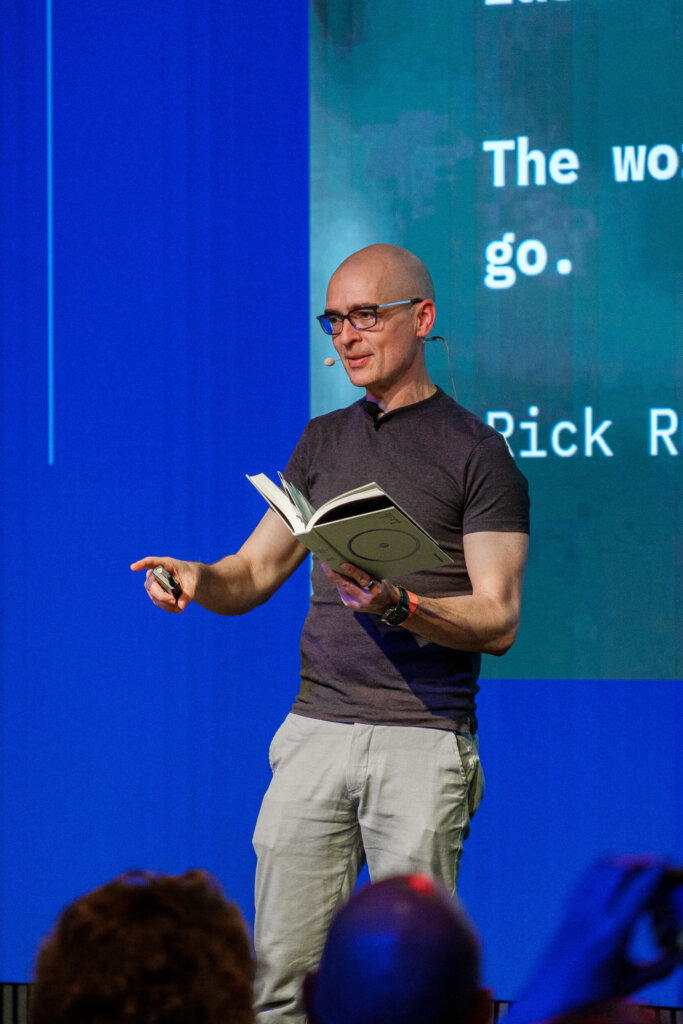
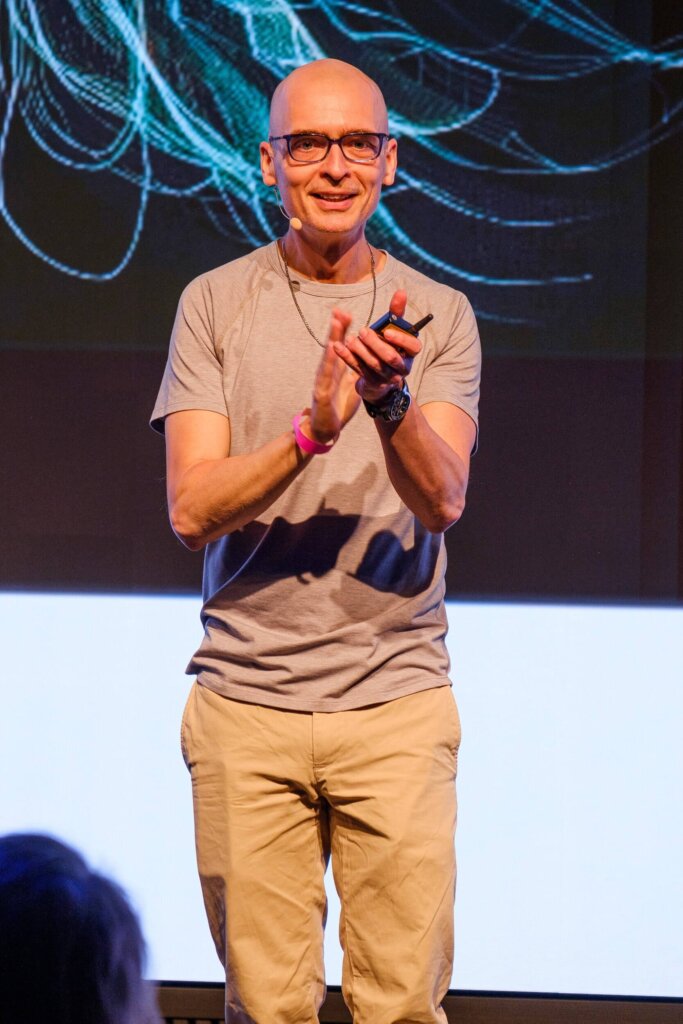
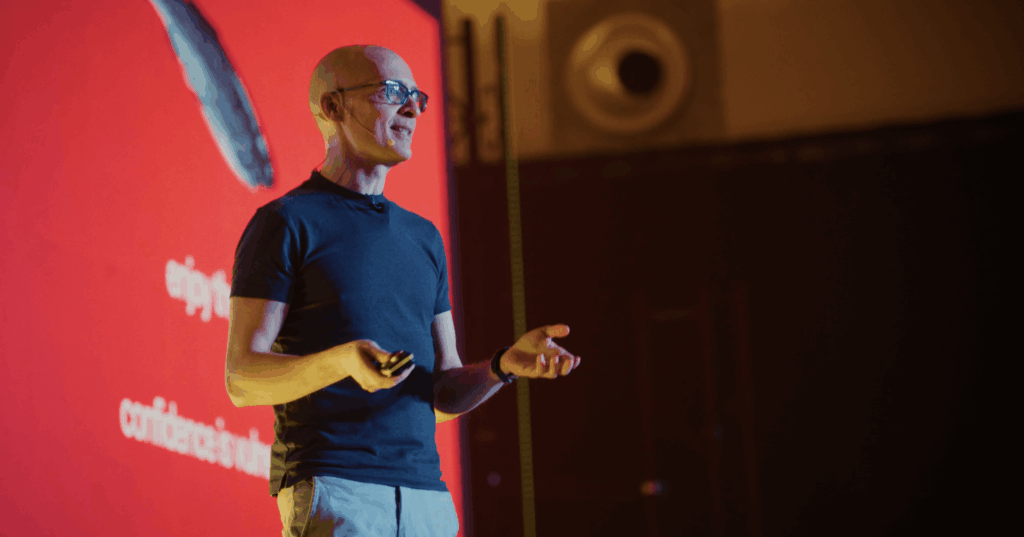
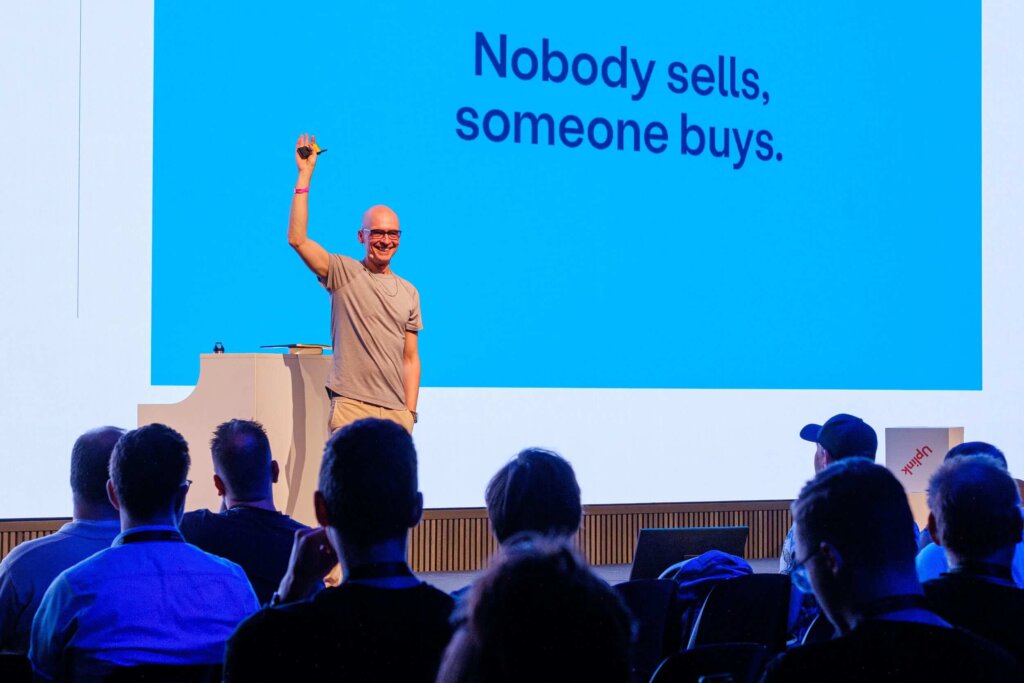
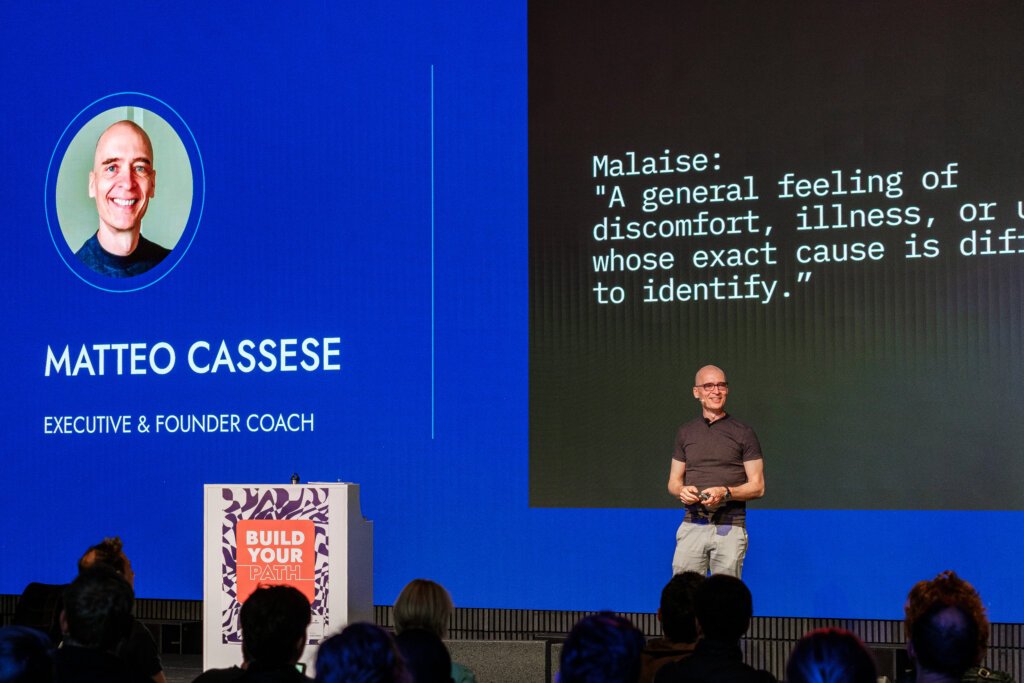
Stages from fifty people to five thousand. The Oura ring logged one keynote as athletic activity. 105 beats per minute. That is what a good keynote feels like from inside it.
A deep introvert and a stage animal. The switch flips on stage and something happens that cannot be scripted.
“Matteo was one of the best speakers at the conference. He was exceptionally prepared and responsive before the event, and helped promote it. Plus delivered an exciting and valuable presentation, that kept the audience fully involved. We’re actually in the process of booking him for two more events.”
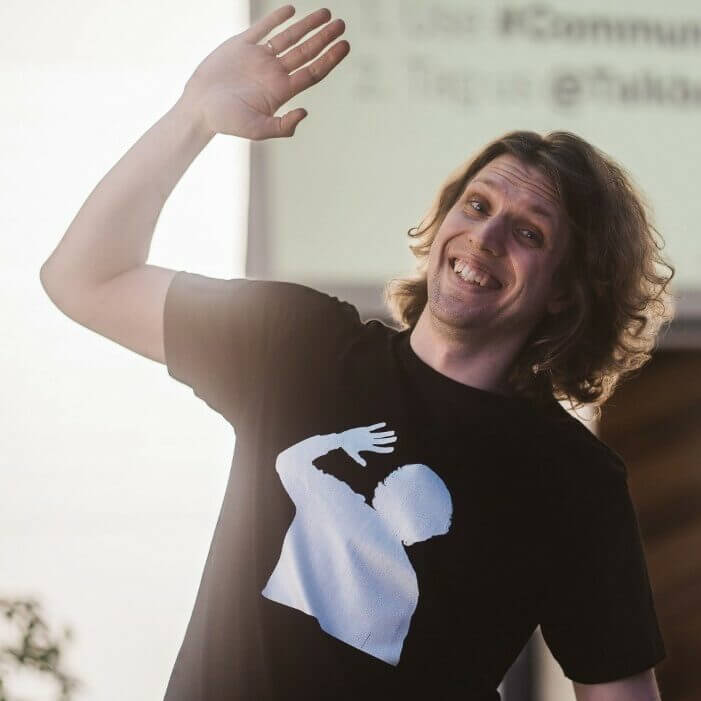
Yurii Lazaruk
Event & Community Architect, 9am. Freelance Unlocked, Berlin.
Keynote topics for Milan conferences
Every talk is customized. The same keynote is never delivered twice. But these are the five themes that keep coming back, because they are the five reasons leaders stop growing. Each one lands with particular force in a city built on execution and constant reinvention.
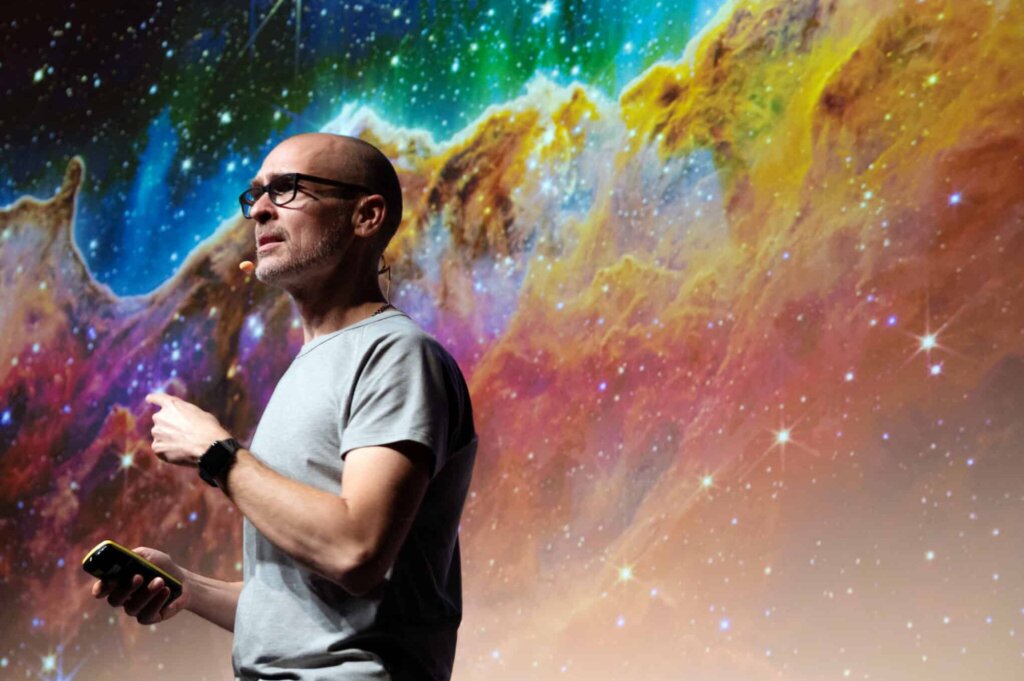
From Mal-AI-se to Ren-AI-ssance
The AI keynote for Milan’s business and design scene. This city runs on creative and industrial talent. This talk addresses what everyone in the room is thinking but nobody is saying out loud about AI’s real impact on how we work and lead.
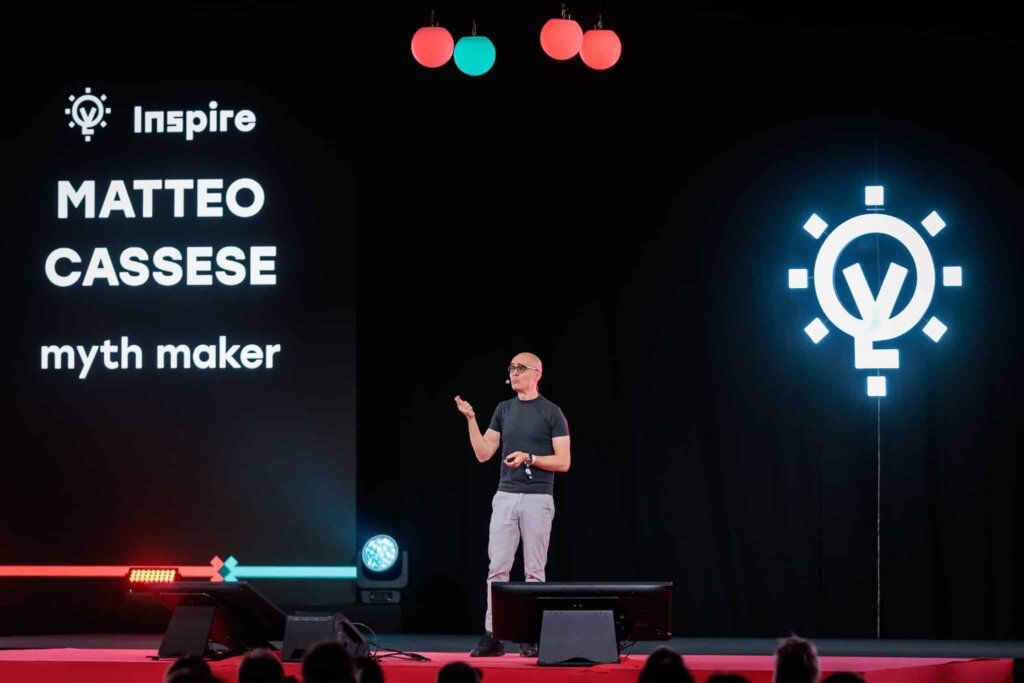
The Power of Discomfort
A leadership keynote built for Milan, where constant improvement is not an aspiration but a standard. This talk attacks the discomfort your leaders are avoiding: the painful questions that could transform your business if someone finally asked them.
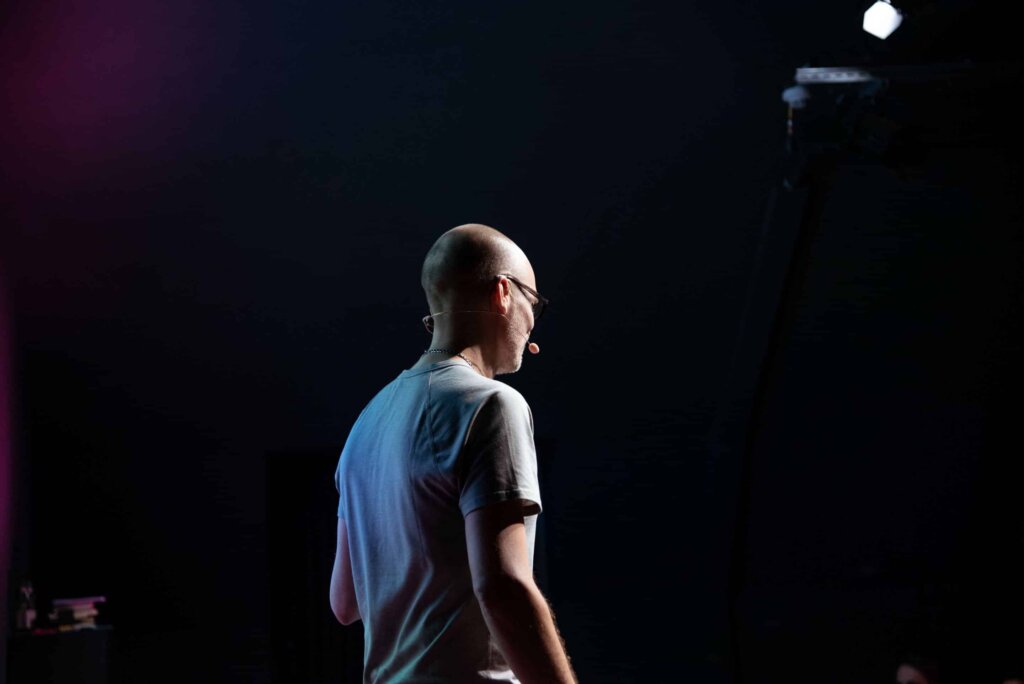
The Confidence Paradox
Milan boardrooms are full of high performers. This motivational keynote reveals the paradox that changes everything about what genuine confidence looks like in a city that measures itself against the world’s best.
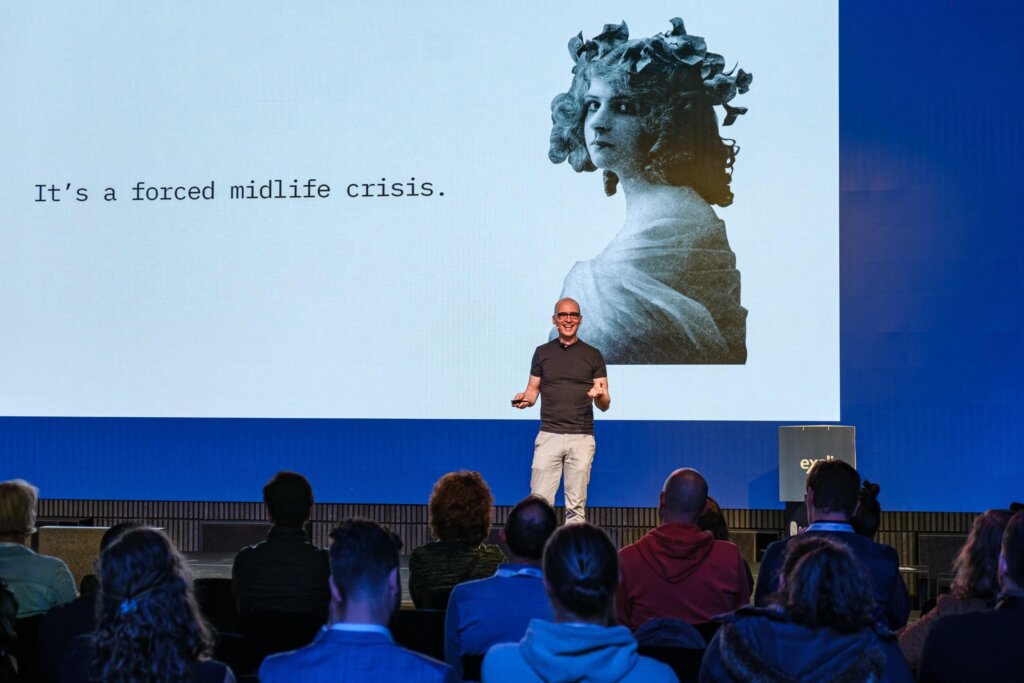
Every Curse Hides a Blessing
Milan has seen industries reinvent themselves completely: manufacturing to design, fashion to tech, local to global. This is the keynote for corporate events in transformation moments, when your most difficult chapter might become your greatest advantage.
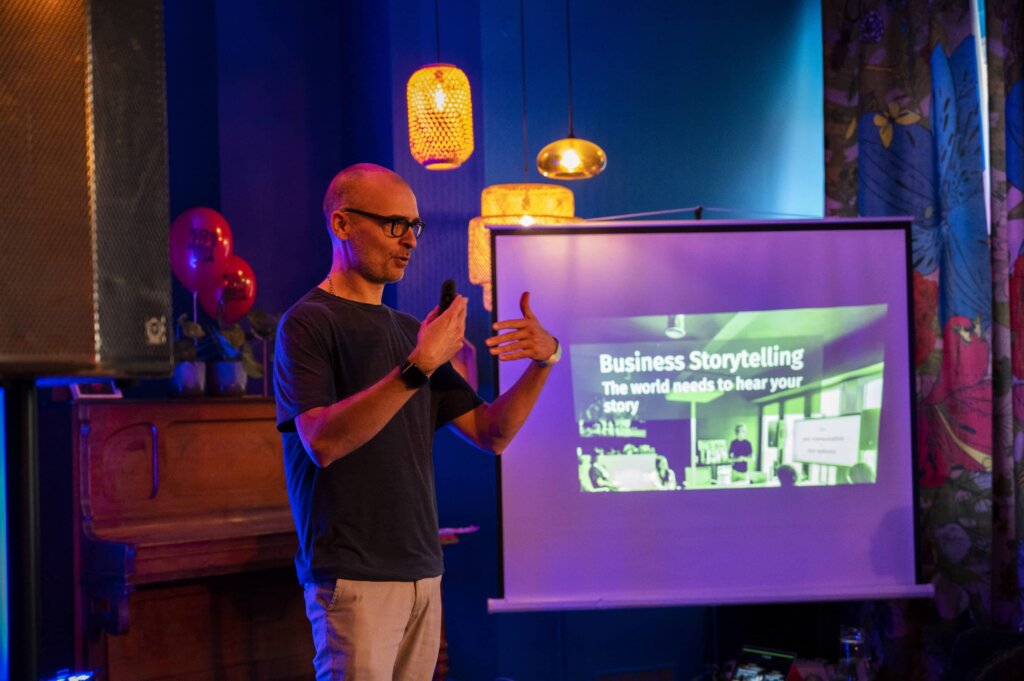
Storytelling Is Not What You Think It Is
In a city where brands are built on narrative and every product tells a story, this is the business keynote that shifts how marketing teams and leadership summits think about the stories they’re already living inside.
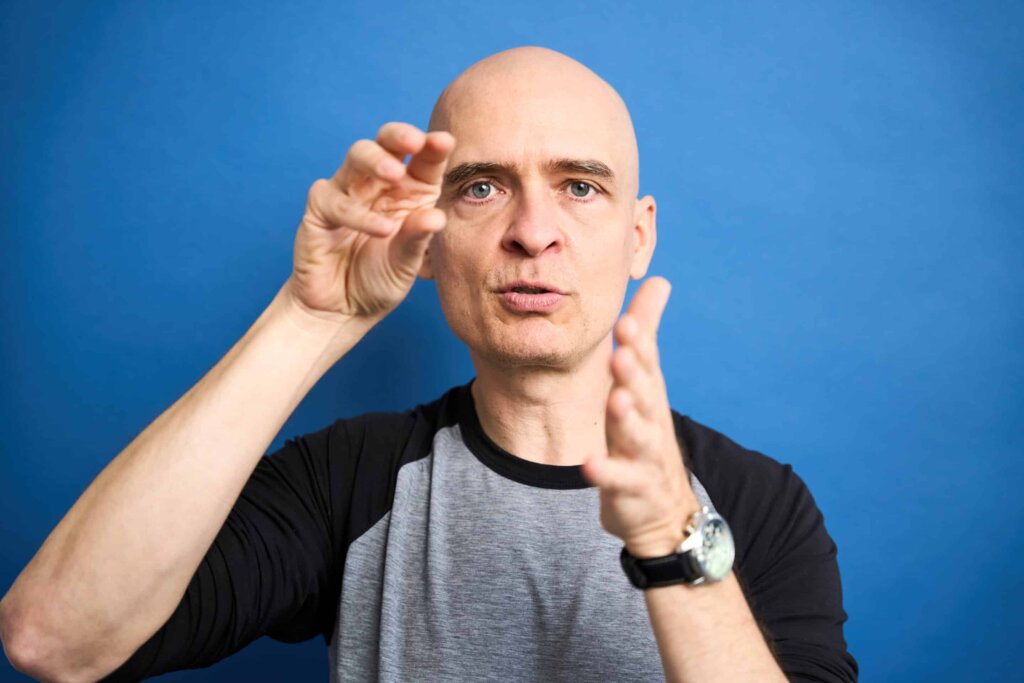
Keynotes that get leaders unstuck
Matteo Cassese, international leadership keynote speaker, helps organizations see leadership differently. Not through motivation posters or five-step methods, but by going to the place most of us avoid to confront the real reasons leaders get stuck. Matteo Cassese brings twenty years of experience to conferences, corporate events, and leadership retreats worldwide. His keynotes cover self-awareness, AI readiness, confidence, and storytelling. They don’t just inspire. They change how people think and act long after the event ends.
Change how your audience thinks
Leaders need new maps. The old ones don’t work anymore.
Matteo Cassese shows them how to navigate technological & social disruption using principles that never fail: building real confidence, telling better stories, understanding what drives them.
Pick your challenge
- AI making everyone anxious
- Teams burning out from change
- Confidence at an all time low
- Leaders don’t inspire
- Success feels hollow
Your audience leaves with tools they’ll actually use. Not another framework to forget.
What happens before, during, and after your Milan event
You’re not booking a speaker. You’re getting a partner for the entire arc of your event.
I don’t deliver the same talk twice. I build it around you.

Before the conference
- Personally attend and interact with you in up to 3 briefing calls
- Post to my socials and my email list about your event
- Shoot a promotional reel for you
- Promote your event on podcasts
- Write a blog post
- Host a live coaching session for your audience
At the conference
- Be there early
- Attend all talks on the day I speak
- Integrate insights from previous speakers into my talk
After the conference
- Ask-Me-Anything session for your audience (after the talk)
- Share full video of the talk on my socials
Trusted by leaders at companies that look for depth
Stages that matter

Book someone they’ll still be quoting next year
“There were at least 500 people in the room. I’m pretty sure your speech made an impact and triggered a mindset shift for each and every one of them. Amazing.”

Zeineb Mrabet
“Arguably the deepest talk of the entire conference. You could feel the energy in the room shift.”
Julian Farizi
“A deeply human experience. He presented the very opposite of a quick life hack and gave a feeling of confidence to everyone in the room. The takeaway was empowerment. What a feat.”
Gregor Müllegger
Senior Software Engineer
“The talk was easy to listen to, with a perfectly clear flow of discussion. What stands out most is the lasting impact: the audience leaves with a seed planted in their minds.”
Angela Violino
Brand Communication Designer, Doodle
“And then Matteo Cassese closed the show with his powerful stage presence, challenging us to rethink the future of work.”

Grazia Ravelli
“It was a pleasure to see you speak! In a world of template frameworks and growth playbooks, it was refreshing to hear someone call the chaos! I’m sure it inspired and energized many!”

Norman Schütt
“The first talk I’ll rewatch when the recordings are out is Matteo Cassese’s. Truly inspiring.”
Balach Hussein
Your insider guide to Milan conferences
A native Italian who watches Milan from the outside and the inside. What follows is what you’d hear over an aperitivo at Navigli if you asked where to put your next event and what to avoid.
Milan’s best conference venues, and the ones that stand out
Milan’s strength is its combination of world-class infrastructure and design intelligence. This is a city that built some of Europe’s most impressive convention facilities and then kept building. The venues here range from trade fair scale to intimate design loft, and the best ones carry the city’s energy into the room.
MiCo – Milano Congressi
One of Europe’s premier convention facilities. Over 70,000 square meters of exhibition and conference space in the Fiera district. If your event needs serious infrastructure, this is the address. Excellent transport links, professional staff, and a scale that changes how an audience experiences a keynote.
Fiera Milano (Rho)
The trade fair complex in Rho, northwest of the city. Home to Salone del Mobile, SMAU, and major international exhibitions. If your event connects to design, technology, or manufacturing, Fiera Milano is the natural context. Easily reached by the direct Malpensa Express stop.
Teatro alla Scala
The world’s most famous opera house. Occasionally available for corporate events and private evenings. If your attendees need to understand what Italian excellence actually means, a dinner or reception at La Scala communicates it without a single word from the stage.
UniCredit Pavilion
A striking glass pavilion in the Porta Nuova district, the new financial and tech hub of Milan. Capacity up to 1,400. The building itself is a statement about modern Milan: bold, European, forward-looking. Good for corporate summits and financial sector events.
Pirelli HangarBicocca
A former industrial locomotive shed converted into one of Europe’s most impressive contemporary art spaces. In the north of Milan, in the Bicocca district. For events where you want the venue to carry cultural weight, this building delivers it. Not conventional, which is exactly the point.
BASE Milano
A former industrial manufacturing space in the Tortona design district, now a creative hub for culture and innovation. If your audience skews toward startups, design, or creative industries, BASE communicates the right values from the moment they walk through the gate.
Spazio Antologico
Intimate, design-forward event space near Porta Venezia. For executive roundtables, leadership dinners, and smaller keynote events where the atmosphere needs to match the quality of the conversation. The kind of space that only Milan does well.
Palazzo Reale
The Royal Palace adjacent to the Duomo. Available for cultural events and private corporate gatherings. For international audiences who will be coming to Milan for the first time, an evening at Palazzo Reale tells them exactly what kind of city they are in.
“Every time you go to Milan you notice what got better. The city has been in a good mood for many years. And it keeps it.”
Milan is Italy’s active capital. Plan your event accordingly.
Rome is the institutional capital. Milan is where things happen. The industries, the design scene, the financial sector, the fashion houses. And the city keeps investing: in the Porta Nuova district, in the new cultural spaces, in the infrastructure that makes it easier to host world-class events every time you visit.
This matters for your event. Your attendees from London, Paris, Frankfurt, and New York will arrive with an expectation. Milan will meet it. What you can do is choose a venue that matches the city’s ambition, a speaker who understands its energy, and a program that does justice to what the city represents.
Getting here and getting around
Milan has two main airports. Malpensa (MXP) is the international hub, 50 kilometers northwest of the city center. The Malpensa Express train connects directly to Cadorna or Centrale stations in about 50 minutes. Linate (LIN) handles European routes and is only 7 kilometers from the center, reachable in 25 minutes by bus or taxi.
Inside Milan, the metro system is efficient and covers all major conference districts. Multiple lines connect the key areas: Fiera Milano in the northwest (M1), the Bicocca district in the north (M5), and the design cluster around Tortona and Navigli in the south (M2). The city is walkable in the center. Taxis are plentiful. Your international attendees will find it straightforward.
Milan’s event calendar: when to book and when to stay clear
Milan has a calendar that can work for or against you depending on when you arrive. The city’s major events fill hotels months in advance and push prices to their annual peak. Plan around them, or plan inside them if your audience has a reason to be there.
January
Quiet after the holidays. MICAM (international footwear fair) runs in mid-January. Hotel rates are reasonable, venues are available, and the city is focused on business rather than tourism. A good month for internal corporate gatherings and leadership retreats.
February
Milan Fashion Week (women’s fall/winter collections) runs in late February, typically over five days. Hotels in the center fill up and rates spike. If your event has nothing to do with fashion, this is an expensive week to be in Milan. Book before or after the shows, or plan an event that can benefit from the creative energy in the city.
March
Good month overall. MIDO (international eyewear exhibition) and Tuttofood are both March events. The weather is transitional, conference infrastructure is available, and the crowds from February fashion week have cleared. A solid choice for corporate events targeting a European audience.
April
Salone del Mobile and Fuorisalone. The single most important week in Milan’s calendar: the world’s largest furniture and interior design fair, 300,000+ visitors from every major market, plus hundreds of satellite events spread across the city. Hotel prices reach their annual peak. If your event connects to design, innovation, or luxury, April is your natural context. If it doesn’t, avoid these two weeks entirely.
May
Excellent. Post-Salone, the city settles. Warm weather, good venue availability, and Milan in one of its best moods. Ideal for leadership conferences, technology summits, and corporate events that want a European city feeling energized and open.
June
The start of Italian summer. SMAU (technology and innovation fair) sometimes runs in June. The city gets warm quickly. Good for events that can take advantage of outdoor spaces, Navigli aperitivo culture, and the long evenings. Tourist traffic increases but the business crowd is still present.
July and August
Milan empties out. Italians leave for the coast and mountains. Hotels are cheap, venues are available, but your attendees from Milan will not thank you. If your audience is entirely international and the agenda is the draw, summer can work. Otherwise, avoid.
September
Milan Fashion Week again (spring/summer collections, five days in mid-September). The city comes back to life after summer. Outside the fashion week window, September is excellent: the best combination of energy, weather, and availability. One of the strongest months for a keynote event.
October
The conference sweet spot. SMAU (tech and innovation) typically runs in October. Excellent weather, full city energy, good hotel rates outside the fashion week period. This is Milan at its most productive. Highly recommended for leadership summits and corporate events.
November
Underrated. The city is calm, the temperatures are mild, and the major events are over. Good for internal summits, executive retreats, and smaller keynote events where you want your audience focused on the program rather than the city calendar.
December
Christmas season. The Duomo square and Galleria are spectacular. The city is festive but corporate activity drops sharply after the first week. Works for team celebrations and end-of-year gatherings. For serious conferences, close the calendar by late November.
The quick version: May, early June, September (outside fashion week), and October are the best months. April is for events connected to design. July and August are for international audiences only. February and late April are expensive traps if your event has no connection to fashion or Salone.
After the conference: where your team actually wants to go
Milan has been in a good mood for years, and the evenings prove it. Your attendees will talk about what happened after the program ends. Here is what to send them toward.
Navigli. The canal district is Milan’s aperitivo capital. From 6pm onward, the streets along the Naviglio Grande and Naviglio Pavese fill with people. Bars serve drinks with food included. The scene is not tourist-facing, it is genuinely how Milan socializes. For post-conference evenings, this is where to start. Walk along the canal, pick a bar, and let the city do the work.
Brera. The upscale neighborhood north of the Duomo. Art galleries, design showrooms, some of the best restaurants in the city. For dinners that need to impress international guests, Brera delivers. The neighborhood has the quality without the tourist pressure of the Duomo square itself.
Isola. The neighborhood north of Porta Garibaldi that changed completely in the last decade. Low-key bars, independent restaurants, creative spaces. Where younger Milanese professionals actually spend their evenings. For conferences with a creative or startup audience, Isola has more credibility than the obvious tourist circuit.
Galleria Vittorio Emanuele II. The 19th-century covered shopping arcade connecting Piazza del Duomo to Piazza della Scala. One of the most beautiful interiors in Europe. Worth walking through at any time of day. The bars inside are expensive and the service is slow, but the architecture earns every minute of it. For a brief stop with international guests, there is nothing else like it in the world.
The food. Milan is not primarily known for local cuisine the way Bologna or Naples is, which makes it a surprise for first-time visitors. The city’s wealth and cosmopolitan character has built a restaurant scene that draws talent from across Italy and Europe. Cotoletta alla Milanese. Risotto alla Milanese. And then the rest of Italy: Sicilian fish, Roman pasta, Neapolitan pizza made by people who moved north. Your attendees from New York and London will not expect to eat this well.
The mythmaker who decoded leadership
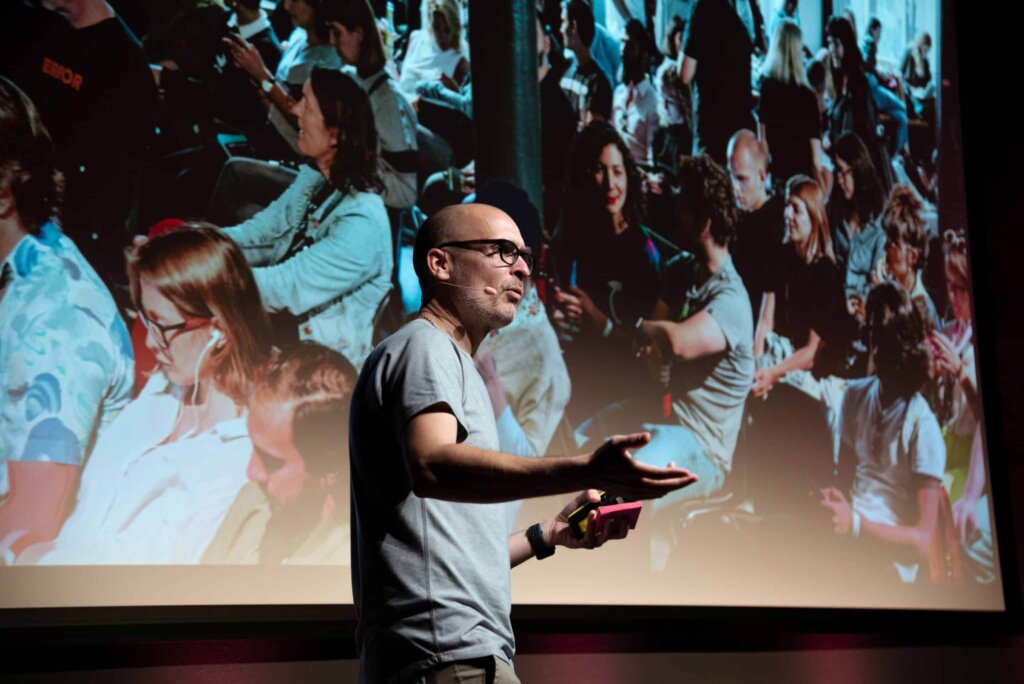
Matteo Cassese is an international keynote speaker, business coach, and mythmaker who has called Berlin home for fifteen years.
Over two decades across tech, film, and consulting. From launching more than 140 films at Warner Bros. to advising Netflix, Sony, LinkedIn, and Heineken. Matteo has observed what truly makes leaders and what breaks them.
His keynotes don’t just inspire. They transform. He blends psychology and myth to help leaders understand the hidden stories that drive their behaviour, and how to change them.
A queer nerd passionate about mythology, technology, tarot, fitness, nature, and cars. On stage, something switches on. In his own words: “I am a deep introvert and a stage animal. I can switch it on and make magic happen.”
Whether speaking to a room of five hundred at MiCo or guiding founders one-on-one, the mission is the same: to help people make meaning out of chaos, so they become someone new on the other side.
Frequently asked questions about booking a keynote speaker in Milan
What makes Matteo different from other keynote speakers in Milan?
He is a native Italian who understands this city from the inside. Berlin-based, but with twenty years of professional life in international rooms and a deep connection to Italy that shapes how he reads a Milan audience. Most speakers motivate. Matteo unsettles. Not to be provocative, to be honest. Real change in how people lead does not come from inspiration alone. It comes from a shift in how they see themselves. That is what he does on stage, using mythology, psychology, and two decades of experience across tech, film, and consulting.

What keynote topics work best for Milan conferences?
It depends on what your audience is struggling with. AI anxiety in the business and design sector? “From Mal-AI-se to Ren-AI-ssance.” Leadership teams performing confidence instead of having it? “The Confidence Paradox.” A company going through transformation? “Every Curse Hides a Blessing.” Marketing and communication teams that need to cut through noise? “Storytelling Is Not What You Think It Is.” Founders pushing through discomfort? “The Power of Discomfort.” Each talk is customized to your industry and audience. None of them are delivered the same way twice.
How do you customize the keynote for our audience?
It starts with a briefing call. Not a logistics call. A real conversation about your people, your industry, and the outcome you need when they walk out of the room. The full program is reviewed. The sector gets researched. Uncomfortable questions get asked about what your audience actually needs to hear versus what they want to hear. The core ideas stay the same. Everything around them changes.
Who books you for Milan events?
Conference organizers, L&D managers, and leadership teams across Europe. Berlin-based, native Italian, with a client list that includes Netflix, PwC, LinkedIn, Heineken, SoundCloud, and Personio. The people who book keynote speakers in Milan are typically looking for someone who can hold a sophisticated international room, not just motivate it. Corporate leadership summits, technology conferences, design industry events, executive retreats. Audiences from 50 to 5,000. What they share: they want their people to think differently when they walk out.
What size audiences do you speak to in Milan?
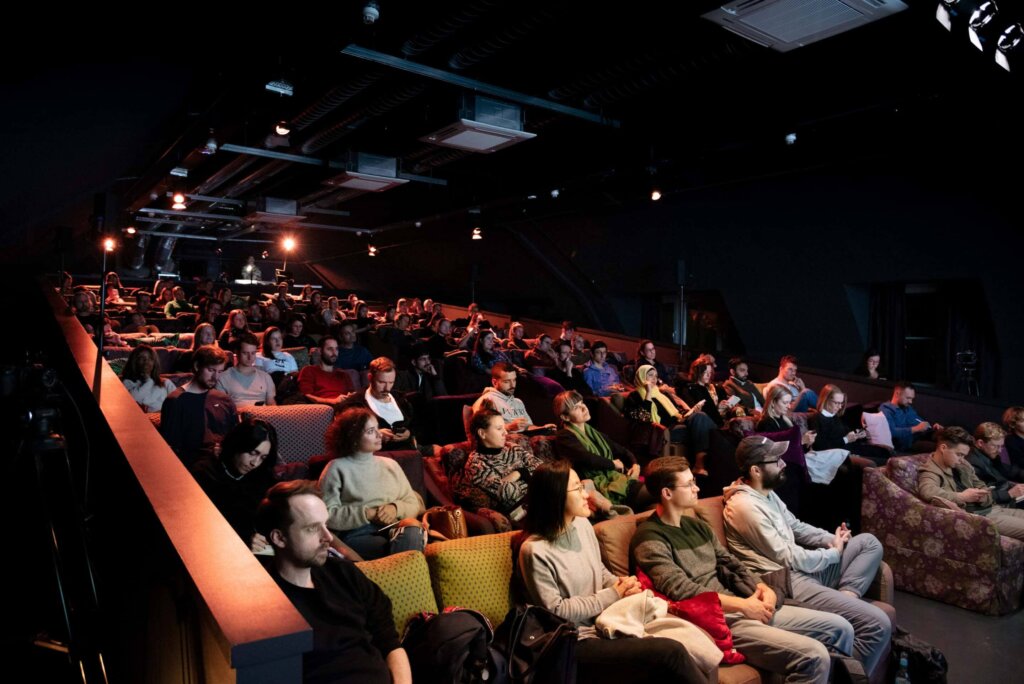
Fifty to five thousand. An intimate executive dinner at a Brera restaurant is a different challenge than a full keynote at MiCo. Both require reading the room. Both require being fully present. Small events do not get a reduced version of the talk. Large stages do not get spectacle in place of substance. The talk changes shape for the room. The honesty does not.
What language do you speak on stage?
English. All keynotes are in English. Milan’s major international conferences run in English, and most corporate events in the city operate in English when the audience is mixed. During the briefing call, the audience mix is discussed so the examples, references, and cultural touch points land correctly. Being a native Italian who grew up with this culture helps when the room is Italian-majority. The language stays English.
What venues in Milan do you recommend for a keynote event?
MiCo for serious conference infrastructure. Fiera Milano in Rho for design and trade fair events. UniCredit Pavilion for corporate summits in the Porta Nuova district. Pirelli HangarBicocca for cultural weight and architectural impact. BASE Milano for creative and innovation-focused audiences. If you are not sure where to host, a conversation about your audience and program will point to the right answer. The full venue guide is further up this page.

How far in advance should we book a keynote speaker in Milan?
For events during Salone del Mobile (April) or Milan Fashion Week (February, September), book six to nine months ahead. Hotel capacity and venue availability become critical constraints during those periods. For events in May, October, or November, three to six months is typically sufficient. For smaller events with flexible dates, four to eight weeks can work. The earlier the conversation starts, the more preparation time there is, and that preparation is where the real value gets built.
What support do you provide before and after the keynote?
Every engagement starts with a discovery call. The program is reviewed and the brief is aligned. Before the event, your conference gets promoted on Matteo’s channels, a promo reel gets shot, and a blog post goes out. At the conference, presence happens before the slot. Not backstage. In the room, listening to other speakers. After the keynote, attendees get an Ask-Me-Anything session and follow-up resources. If you want to go deeper, coaching sessions are available.
Do you speak at events outside Milan?
Based in Berlin, but the work takes Matteo across Europe, the US, and Asia. SXSW. IFA. GITEX. Reeperbahn Festival. Campus Party. InfoShare. Cities big and small: London to Lisbon, Prague to Paris. Travel is handled as part of the booking and confirmed when both sides sign. If you are outside Europe, reach out early. Some dates need more lead time.
Can you combine the keynote with a workshop or coaching session?
The zone of genius is the stage or 1:1 coaching. Workshops are not offered. But there are excellent facilitators who pair well with this kind of keynote and can take the ideas from the room into structured work with your teams. Those conversations happen during the briefing process.
How do I start the booking process?
Hit “Put your date on hold.” That’s not a commitment. It’s a conversation starter. You tell the date, the location, and what you are building. If Matteo is available and what you need is something he can do well, the conversation moves to a brief and a proposal. If it is not a fit, a colleague who would be a better fit gets referred. No intermediaries. You talk directly.
Transform your Milan event with an unexpected “aha” moment
Every Matteo Cassese keynote reveals the hidden patterns keeping your leaders stuck. And shows them how to break free. Your audience won’t just be inspired. They’ll be different.
About
Keynote Speaker Milan is a professional speaking service by Matteo Cassese, offering customized keynotes on AI transformation, leadership confidence, business storytelling, and personal growth for conferences, corporate events, and leadership summits in Milan and worldwide.
Related
- Provider: Matteo Cassese (Person)
- Related: Professional Speaker (Service)