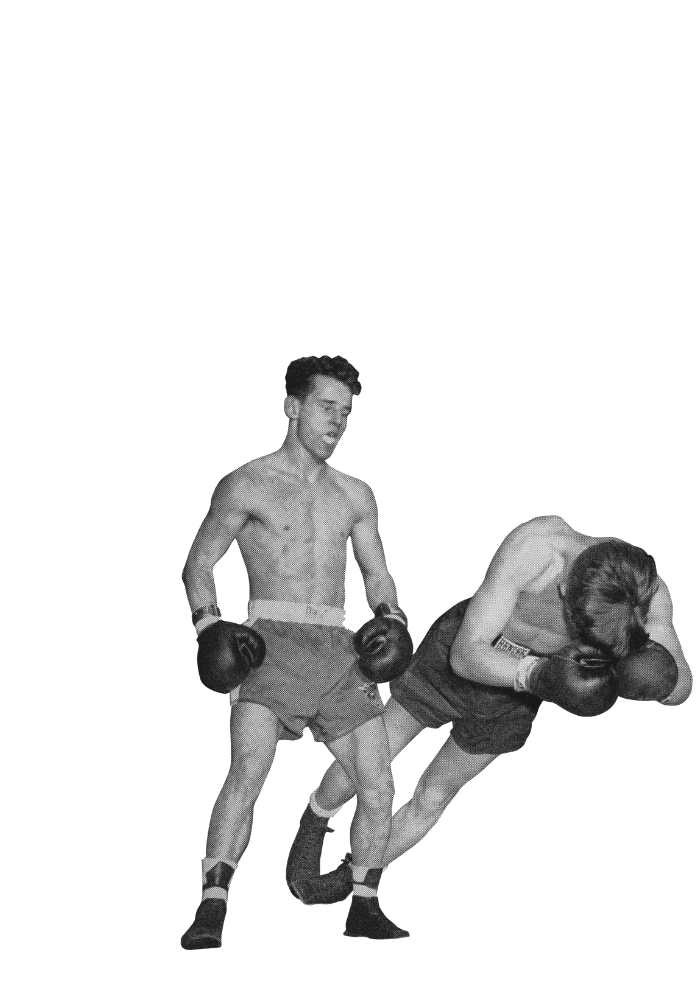

By Matteo Cassese. I coach founders and executives, and I burned my own business down twice before I understood why.
The signs are usually very physical. Someone who cannot get out of bed. A business that has stopped. A phone that has gone quiet. If that is the picture, then the founder whose ads are still running and whose invoices are still being paid does not qualify, and so they never say the word out loud. They say they are tired. They say it is a busy quarter.
Mine looked like this from the outside.
This is my founder burnout. Two years of work. Over 100k invested in ads. A funnel returning two to one at its best. Nothing had collapsed. I was doing a million jobs and was so exhausted, I could not even be enthusiastic and enjoy it.
Is it founder burnout if the business is still running and the money is still moving?
Nothing collapsed, and that is what made it hard to see
I was operating ads. I was operating a video server and editing the video and acting in it. I was writing the video sales letters, scripting them, building the landing pages, measuring the conversions, dealing with the pixels. Every one of those is a real job. I was doing all of them.
So many operational tasks that I completely lost the big picture, where I was going, what I was doing. I totally lost myself in doing this.
Nothing about that shows up in a dashboard. The dashboard was fine. The cash was moving. The person who was supposed to be running the thing had quietly walked out of the middle of it, and there is no metric for that.
Always busy, out of ideas: working more than ever, none of it yours
In 2022 I was coaching, and I decided I needed to build a business around the coaching. What I actually built was a repeatable marketing machine, which is what everybody calls a funnel. I took my attention off my craft as a coach, off being the person who helps people, off being a sparring partner, and I moved all of it onto the marketing. Two years of thinking all day about marketing. Two years not spent on the work I am actually good at.
Running the ads. Running a video server. Editing the video. Writing the video sales letters and scripting them. Building the landing pages. Measuring the conversions. Handling the pixels. In a company each of those belongs to somebody with a title. Alone, they are your calendar.
That phrase comes from a diagram I draw for clients, and it describes what happens when one particular half of a founder ends up running everything alone. The full description is: always busy, out of ideas, questions everything, obsesses over numbers and the competition. That is a description of maximum activity and zero origination, which is a different animal from laziness or a bad quarter. You are producing more work than you have ever produced. None of it is coming from you.
Two years. Over 100k invested in ads. At the peak, a 2:1 return, which is a 200% ROI, and on paper that is a working funnel. Then factor in the work. All of it, every hour of the list above. Once that goes in, I was spending money to get the exact same amount of money back. When I measured the funnel’s actual performance it was more like 150%. And 150% means you are making zero. That is my framing of my own numbers, not a rule of finance.
You are just having cash flowing in, cash flowing out, and you aren’t really running a business.

What you actually lose
What I lost was myself. What I lost was my authenticity. What I lost was my uniqueness.
I said that three times in a row when I was describing the funnel, and I said it three times because it took three tries to name what had gone.
The offer I had built over two decades was a personal one. The things in it were the things I had discovered and explored myself. When I dropped that offer into a numbered marketing structure, it did not get sharper. It got flatter. They all lost power completely. Everything specific about the work, everything that only I could have said, came out the other end oversimplified.
Revenue you can rebuild in a quarter. The thing that made your work yours is harder to find again once you have handed it over.
The fear underneath it
Underneath the two years of operating there was a feeling I was moving away from at speed. I was running away from the tension, away from the fear, away from the sensation of oh my god, I’m not enough. I’m not going to be able to do this and I don’t have a good positioning. I don’t even know what I’m doing.
The fear came first. The funnel came second. Buying a proven system was not a business decision that happened to go wrong. It was the fastest available exit from a feeling, and it worked, in the sense that I did not have to feel it for two years.
Why operating all day feels like doing something right
Money went out. Money came back. You watch that happen and you think, look, I am spending all this money, so I am doing something, I am operating, and then money returns. So you say, I am doing something right.
Motion produces a reading, the reading is positive, and the positive reading buys you another quarter of motion. It can run for years without ever having to answer the question of whether anything is being built.
Ask yourself:
- Is your calendar full of things only you can do, or things you are afraid to hand over?
- Is any of this work producing a new idea, or just executing yesterday’s?
- Are you reading the motion as progress, or are you actually building something?
- Does the dashboard look fine while you are the one who is in pain?

What I can tell you, and what I cannot
I am not a doctor and this is not a diagnostic tool. There is no list here to score yourself against, and if what you are living with is a health matter, a page on the internet is not where it gets settled.
What I have is one account, in detail, of a business that kept working while I stopped. If the shape of it is familiar, the rest of this guide is what I did about it.
What actually helped
How do you get from founder burnout to a business that fits you?
What I did in 2024: shut the business, fired all my clients, no revenue, savings, doing nothing. I have no test for whether you should do the same.
What the phase asks for is this: stop being busy, close any open projects, stop operating, stop running around, stop reacting.
I am not going to tell you that this is going to make you more money. I think it is just going to make you happier.
The best way to make space is actually not to make space at all. It is to take twice, or three times, or four times as long doing the same thing, being extremely intentional about it. You get letters, people send you stuff, people ask you stuff. Don’t respond. Chaos increases the moment I stop paying my bills, because then I go into collection, and collection is interest. So I am not suggesting you stop paying your bills.
I want you to push back, because we really do not need another framework. We have enough frameworks.
Common questions about founder burnout
What does founder burnout feel like?
I was so exhausted, I could not even be enthusiastic and enjoy it. I was operating ads. I was operating a video server and editing the video on it. I was writing the video sales letters, scripting them, building the landing pages, measuring the conversions, dealing with the pixels. Every one of those is a real job. I was doing all of them.
Is it still burnout if my business is making money?
Yes. Two years of work. Over 100k invested in ads. A funnel returning two to one at its best. Nothing had collapsed. And I was no longer anywhere inside my own business. You are just having cash flowing in, cash flowing out, and you aren’t really running a business. What was missing was not volume. It was anything of mine at the center of it.
How is founder burnout different from ordinary stress or a bad quarter?
That is a description of maximum activity and zero origination, which is different from laziness or a bad quarter. You are producing more work than you have ever produced. None of it is coming from you. The ideas have been outsourced to a system, and what is left of your day is the execution of somebody else’s thinking.
How is founder burnout different from employee burnout?
Nobody else sees it happen. Nothing about that shows up in a dashboard. The dashboard was fine. The cash was moving. The person who was supposed to be running the thing had quietly walked out of the middle of it, and there is no metric for that.
Can you recover from founder burnout?
I did. What I did in 2024: shut the business, fired all my clients, no revenue, savings, doing nothing. This could be a day, a week, a month, or a year. For me it was quite a few months. I am not going to tell you that this is going to make you more money. I think it is just going to make you happier.
Explore more
- Entrepreneur coaching: one to one for founders
- The Founder Journey, the whole free course
- The leverage assessment
What you should do next
Discover what’s holding you back from the inside out. Understand where you naturally have leverage and where it eludes you.
Take the free founder mindset course.
If you want to talk it through with me, my coaching for founders starts with a first session at EUR 490, fully refundable.
About Matteo Cassese
Business coach, keynote speaker, and mythmaker, Matteo helps leaders thrive in chaos and conflict. Twenty years across tech, film and consulting, seven of them at Warner Bros., founding-team at Netflix Italy, and advisory work for Sony, LinkedIn and Heineken. Berlin based. His unique perspective as a queer nerd passionate about mythology and technology creates a safe space for leaders to be vulnerable and reach their full potential. Read more about Matteo.